Some links on this page are affiliate links: we may earn a commission if you buy, and your price doesn't change. Details
Alongside stored water and a plan for treating it, some households add a home-built water-from-air unit as an extra source.
See the Water Freedom System guide on the official site60-day money-back guarantee
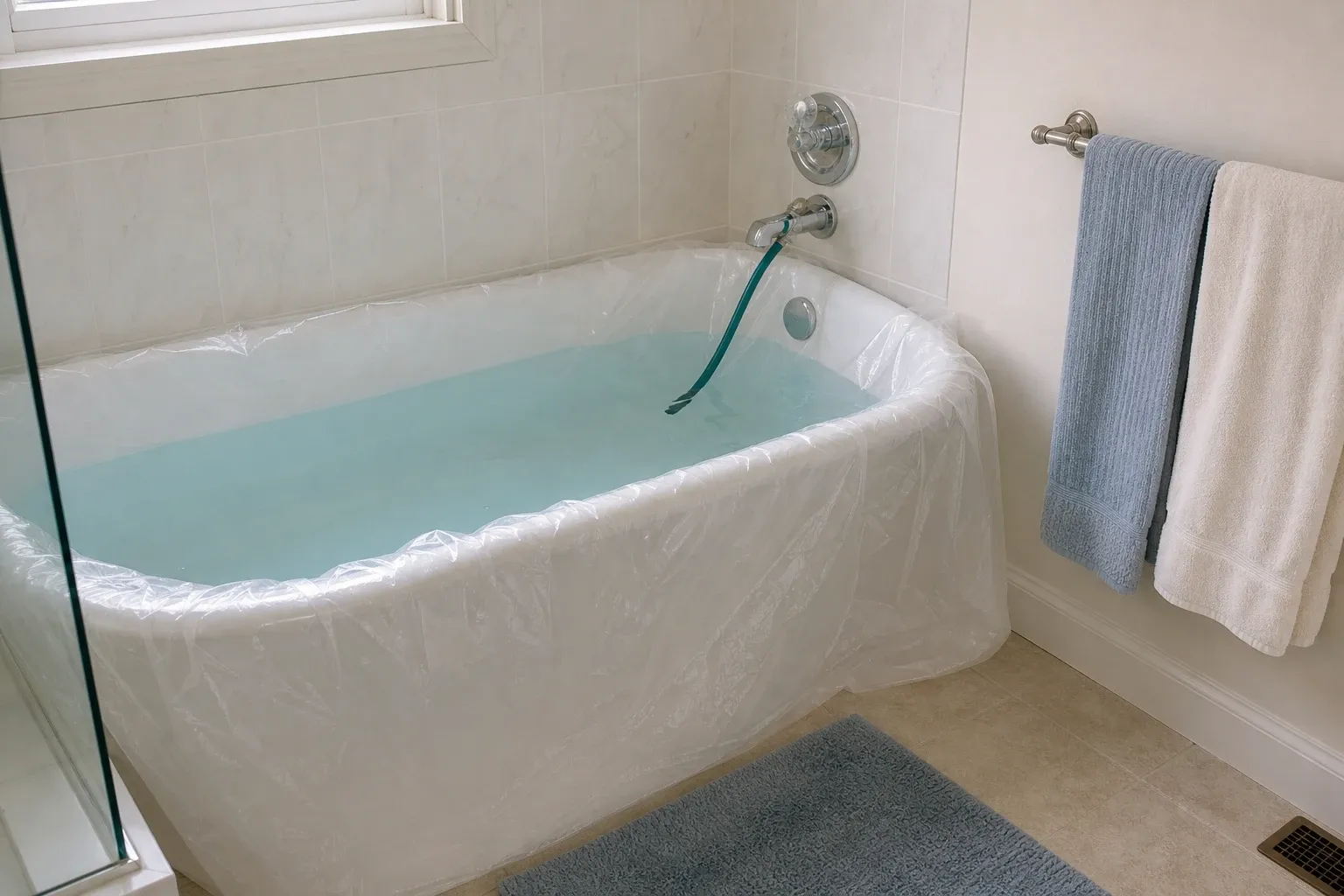
Does bathtub emergency water storage actually work?
Bathtub emergency water storage works as a short-notice reservoir you fill when a warning comes, not as a pantry item. It buys you days, not months.
The short answer
A tub can hold roughly 30 to 100 gallons, depending on its size and how full you fill it. That’s a lot of water for flushing, washing and cleaning.
Water in a plain open tub is not drinking water unless you treat it. Drain seals often leak slowly, and dust, pets and kids can all get into the water. A liner or bladder adds a barrier and a closure, but it still needs clean water and quick use.
A plain example: the storm warning evening
Picture a forecast that says power may go out tomorrow. You scrub the tub, sanitize it, lay in a food-grade liner, fill it, close it and write the date on it. Next morning, your sealed jugs stay for drinking, and the tub water handles toilets and dishwashing.
What is the difference between a tub liner, a water bladder and a storage bag?
These names overlap. A tub liner sits inside your bathtub. A bladder or storage bag may be freestanding, or it may need the tub’s support to hold its shape, so check the product page to see which one you’re buying.
| Type | Typical capacity (varies by product and tub) | Best for | Main limit |
|---|---|---|---|
| Bathtub liner bag | About 30 to 100 gallons | Last-minute fill in an expected outage | Needs a clean tub; days of use, not months |
| Standalone water bladder | A few gallons to many dozens | Floors, garages, spots without a tub | Needs a flat, protected surface; can puncture |
| Rigid containers (jugs, barrels, cans) | 1 to 55 gallons each | Long-term, rotated supply | Take floor space; cost more per gallon up front |
Bathtub liner bags
A bathtub liner bag is a thick plastic sheet or bag shaped to sit in a tub. Look for food-grade plastic and a BPA-free label. Skip anything sold as a plain trash or painter’s liner.
Standalone water bladders
A water bladder is a flexible tank. It suits people with no tub, but it must sit on a smooth surface with no sharp edges. Emergency water storage bags are usually smaller versions of the same idea.
Rigid containers compared
Jugs, barrels and cans don’t sag or tear as easily, and they can hold water for the long haul when sealed and rotated. Our emergency water storage container comparison covers them. For bigger setups, see the emergency water storage tank guide.
How do I clean the tub and fill a liner safely?
Clean the tub first, sanitize it, rinse it, then fill the liner with tap water you trust. Follow the liner maker’s instructions where they differ from this.
Before you fill
Scrub the tub with soap and rinse it. Then sanitize with a diluted solution of plain, unscented household bleach, using the ratio the liner maker gives. Rinse well. Check the tub for sharp edges before you lay the liner.
Filling and sealing
Fill with tap water from a source you trust. Close or cover the liner, label it with the fill date, and keep pets and children away from it. Tap water you trust, stored in a liner made for drinking water, doesn’t automatically need treatment. Water left in an open tub does.
Fill the liner partway first and check for leaks before you fill it all the way. A closed drain doesn’t stop the liner itself from leaking, and a slow drain leak doesn’t rule out an intact, sealed liner.
Getting water out
Use a water siphon or a hand pump. Don’t dip with unwashed cups or pots, because that puts germs straight into the water. A short length of clean food-grade tubing does the job for most tubs.
How long can water sit in a bladder, and how do I treat it?
Water in a tub liner or bladder should be used within days, following the maker’s stated time. Treat that window as days, not months.
Use-within windows
If the maker gives a time limit, stick to it. Use the tub water first for flushing, washing and cleaning, and keep sealed containers for drinking. When the emergency passes, empty the liner and rotate the water out.
Treating stored water before drinking
Treat open-tub water before you drink it, and treat any stored water if you have doubts. Boiling for 1 minute (3 minutes above 6,500 feet) and household bleach disinfection both deal with germs. If the water looks cloudy, run it through a water filter first, then disinfect.
Boiling, bleach and ordinary filters do not remove metals or chemicals, such as fuel or residue from a non-food-grade container. If your water may be chemically contaminated, use another safe supply and follow your local health department’s guidance.
Who should skip a bathtub bladder?
Skip a bathtub bladder if your tub, home or needs make a filled tub a poor fit. A tub can’t fix water that was contaminated before you filled it.
Situations where it falls short
- Renters with shared or damaged tubs, where a liner may not sit safely.
- Homes with a shower only and no tub.
- Households with toddlers or limited mobility, where a heavy filled tub is a hazard.
- Anyone who wants months of supply.
Better choices for those cases
Sealed barrels, cans and bottles suit longer needs. A common guideline is at least 1 gallon per person per day, for 3 days at minimum and a 2-week supply if you can, replaced every six months. Our emergency storage water guide shows how to build that base.
Bathtub water storage checklist
This checklist walks you from the warning to the cleanup, so you can follow it with wet hands.
The usual rule is about one gallon per person per day for drinking and basic needs. Tub water is extra on top of that, mostly for flushing and washing.
What else can I do for longer-term water?
Build a base of sealed containers and treat the tub as a top-up. Rotate the sealed water on a schedule so it stays fresh.
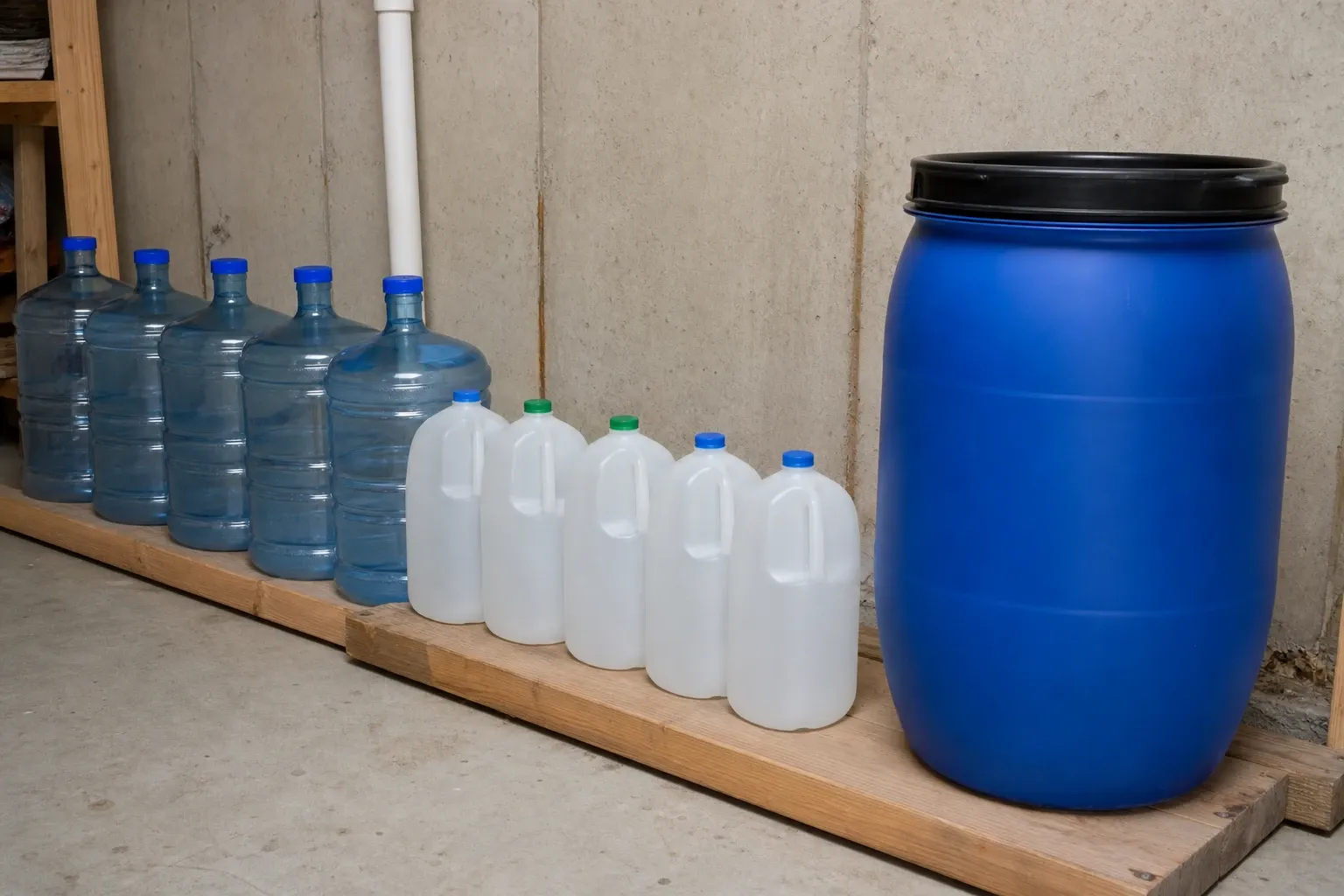
Sealed containers and rotation
Start with a few jugs per person, add a barrel if you have room, and write dates on everything. For a long-term drinking setup, choose treatment certified for the specific contaminants you worry about, and have the water tested by a certified lab. Repeat the testing over time, because one result isn’t ongoing proof.
Making water from air as a backup idea
A dehumidifier-based atmospheric water generator is a separate, slower way to collect extra water, and it needs humid air to work. Water collected from a dehumidifier or a home build is not drinking water as collected. The Water Freedom System is a guide to building one; the maker says a build can make up to 60 gallons a day, though the guide itself gives no output figure. Our Water Freedom System review has the details.
Questions people ask
How many gallons does a bathtub hold for emergency use?
It depends on the tub and liner. Many home tubs hold roughly 30 to 100 gallons when filled. Check your liner’s stated capacity, and don’t fill past it. Tub water suits flushing and washing first, with sealed containers kept for drinking.
Can you drink water that has been stored in a bathtub?
Water from an open tub should be treated first. Open tubs pick up dust, germs and pet hair. Filter cloudy water, then boil it or disinfect it with bleach. Trusted tap water sealed in a drinking-water liner doesn’t automatically need treatment. None of these steps remove chemicals or metals, so if chemicals are a concern, use another safe supply and follow local health department guidance.
How do I keep a tub liner from leaking?
Smooth out the tub to remove sharp edges, and lay the liner without folds pulled tight. Fill it partway and check for leaks before filling all the way. Closing the drain doesn’t stop a liner from leaking, so use only liners made for water storage.