Some links on this page are affiliate links: we may earn a commission if you buy, and your price doesn't change. Details
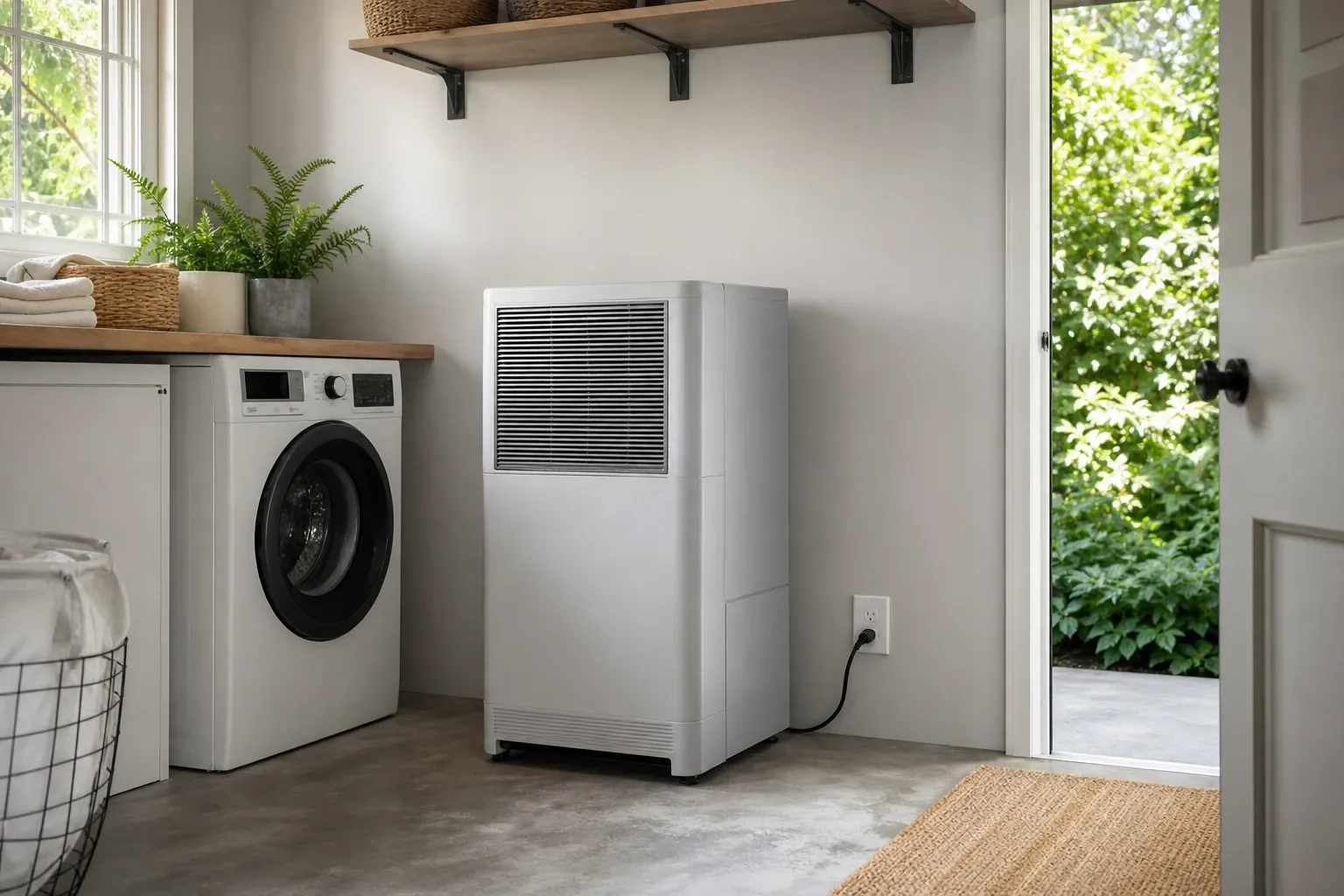
Quick picks
The finished machines here start at $2,150 for the NUBE SS30, and the T12 costs $4,299.99. The GENNY+ is priced by quote. The Water Freedom System is a $39.69 DIY guide; parts and tools cost extra.
Our top pick: Altitude Water Trident T-12
- A finished home unit with a 7-gallon tank and ozone, carbon and calcite filters.
- The maker rates it at up to 15 gallons (about 57 liters) a day, depending on temperature and humidity.
- The maker says it draws about 750 W and recommends at least 40% relative humidity.
- It costs $4,299.99, with a 1-year full warranty advertised.
It wins on our own criteria because it is the only unit here with a published price, rated output, power draw, filter list and warranty all on record. Read more in our Altitude water generator review.
The others:
- Innovaqua NUBE SS30: a countertop unit with a lower published price (from $2,150) and a maker rating of 8 gallons a day.
- Watergen GENNY+: best for buyers happy to buy, lease or pay per liter through a dealer quote.
- Water Freedom System: the build-it-yourself route for people who like projects, covered in its own section below.
See the Water Freedom System guide on the official site60-day money-back guarantee
Which atmospheric water generator should you pick?
The right atmospheric water generator depends on your budget, how humid your home is, and whether you want to build or buy. The powered machines compared here pull moisture from the air, and the DIY guide describes a dehumidifier-based build. Output depends on humidity and temperature.
Best for a ready-made, plug-in home unit
The Altitude Water T12 is the pick for plug-and-play buyers. The maker says it makes up to 15 gallons a day, depending on temperature and humidity, and recommends at least 40% relative humidity. Skip it if $4,299.99 is more than you want to spend.
Best for tight budgets and hands-on learners
The Water Freedom System guide suits people who like tools and projects. The $39.69 digital guide costs less up front than the two priced machines, but the guide’s own parts list adds about $270, plus tools and power.
Best for off-grid or solar setups
The maker says the T12 can run from grid, solar, battery or generator power and draws about 750 W. Size your panels and batteries for that draw and the hours a day you plan to run it.
How we compare them: the five criteria
We compare each home atmospheric water generator on five things that decide whether it fits your home and budget.
- Price. The full cost, including parts, filters and setup, not just the sticker.
- Rated output and its test conditions. Capacity in liters per day, and the temperature and humidity the rating assumes.
- Power consumption. Watts drawn, and what that means per liter of water.
- Multi-stage filtration and upkeep. Activated carbon, UV sterilization or ozone, and how often filter replacement comes around.
- Warranty, noise and placement. What the warranty covers, plus the maker’s placement and clearance instructions. Ask the seller for noise figures too.
Filters change the real price. The SS30’s filters and spare parts start at $25, so ask the seller what each required filter costs and how often it needs changing.
Atmospheric water generator comparison table
All specs below come from the makers.
| Option | Type | Maker’s rated output | Up-front cost | Power and needs | Warranty or refund |
|---|---|---|---|---|---|
| Altitude Water Trident T-12 | Finished unit; 7-gallon tank; ozone, carbon and calcite filters | Up to 15 gal (about 57 L) a day, depending on temperature and humidity | $4,299.99 | About 750 W; at least 40% RH recommended | 1-year full warranty advertised, but the terms disclaim warranties and sell ‘as is’; returns in original condition, buyer pays return shipping unless defective; info@altdwater.com or 1-954-530-5753 |
| Innovaqua NUBE SS30 | Countertop unit | 8 gal (about 30 L) a day | From $2,150; filters and spare parts from $25 | 110V or 220V | Standard returns within 30 days of delivery for defective or transit-damaged units; other returns unused, in original packaging, buyer pays shipping and import taxes to Mexico; info@innovaqua.org |
| Watergen GENNY+ | Finished unit; 11 L tank | Up to 20 L (5.28 gal) a day at 26.7 °C and 60% RH | Quote from Watergen or a dealer | Plug-in, no plumbing; output falls in cooler, drier air | Limited warranty on material and workmanship defects, 12 months from installation; filters and UV lamps 3 months; claims through Watergen or the selling dealer |
| Water Freedom System | DIY guide (PDF, videos, 4 bonus books) | Follows the dehumidifier you use and your humidity | $39.69 digital, plus about $270 of parts by the guide’s list | Electricity and humid air | 60 days from the ClickBank purchase date; shipping not refundable; digital access may be removed |
Countertop units
The NUBE SS30 is sold as a countertop atmospheric water generator. Before you pick a kitchen spot, check its size and the maker’s clearance rules.
Home units such as the Altitude Water T12 and Watergen GENNY+
The T12 has a 7-gallon tank, and the GENNY+ has an 11 L tank. Check your outlet and the maker’s placement instructions first.
DIY dehumidifier-based build
A DIY build turns dehumidifier-style parts into a water source. The guide has the lowest purchase price here, but your total also covers parts, tools, power and any treatment. See our Altitude water generator review if you’d rather compare a finished machine in depth.
How much water can one make where I live?
An atmospheric water generator’s output depends on your humidity and temperature, so no fixed number holds for every home. Read the conditions attached to each rating.
Humidity and temperature
For machines that condense water, warmer and more humid air gives them more moisture to collect. Watergen says GENNY+ output falls in cooler, drier air, and the T12 maker recommends at least 40% relative humidity. Air conditioning also dries indoor air, which cuts output.
Watergen rates the GENNY+ at 26.7 °C (80 °F) and 60% humidity. Your room may be cooler and drier.
Sizing a unit for your household’s daily use
Start with what you’ll actually drink and cook with. Say a family of four plans on about 1 gallon each a day for drinking and cooking. That’s 4 gallons (about 15 liters).
Watergen rates the GENNY+ at up to 20 L per day at 26.7 °C and 60% relative humidity, with no figure given for a drier room. So pick a rating well above your need, and keep stored water as backup.
What does it really cost per liter, and is it cheaper than bottled water?
To find the electricity cost per liter, work out the power cost, then divide by the water made. Count filters and upkeep separately.
- Divide watts by 1,000, then multiply by hours run to get kWh.
- Multiply by your electricity rate from your bill.
- Divide by liters made.
Worked example: The maker says the T12 draws about 750 W. That’s 750 / 1,000 x 24 hours = 18 kWh a day. At an example rate of 15 cents per kWh, that’s $2.70 a day. If it made its rated 15 gallons (about 57 L), that’s under 5 cents a liter. If humidity halves the output, it’s nearly 10 cents a liter.
Compare that with the per-liter price on your bottled water and your tap water bill. Then add filters: ask the seller for the price and replacement interval of each one. You’d only use fewer plastic bottles if the collected water actually replaces bottled water you’d otherwise buy.
Is the water safe to drink? Filtration, testing and standards
Finished drinking-water generators treat their own water. Follow the maker’s instructions and filter schedule. Watergen’s limited warranty covers material and workmanship defects for 12 months from installation, with filters and UV lamps covered for 3 months; contact Watergen or the selling dealer. Warranty length is not a filter schedule, so ask for the replacement interval.
Common treatment stages in finished units:
- Activated carbon: traps many tastes, smells and some chemicals.
- UV sterilization: ultraviolet light that knocks out germs as water passes by.
- Reverse osmosis: pushes water through a very fine membrane to remove dissolved material.
- Remineralizing: adds minerals back, since condensed water starts out low in them.
When a unit claims certification, look up the exact standard and listing yourself. NSF is a group that certifies filters against specific standards.
Dehumidifier and home-build water is not drinking water as collected. Boiling, bleach and household filters kill germs or catch particles, but they don’t remove metals or chemicals that coils, solder, drip pans or non-food-grade plastics can add. Use DIY water for plants, cleaning and flushing. Only drink it if every part the water touches is drinking-water safe, the treatment fits the contaminants actually present (for example, a filter certified to NSF/ANSI 53 for lead), and a certified lab test confirms it.
Water Freedom System: the DIY option, honestly assessed
The Water Freedom System is a $39.69 step-by-step guide for building a home dehumidifier-based atmospheric water generator. It’s a separate route from buying a machine.
What you get
The digital product includes a 114-page Essential Guide, a 188-page printable version with photos, a parts and tools checklist, a companion manual on minerals, and a 107-page off-grid guide on home power. Four bonus books cover emergency drinking water, filtration and purification, water management and water storage.
Pros
- Lowest up-front cost on this page
- Step-by-step build instructions and a parts-and-tools checklist
- Bonus books on storage and purification
- Advertised 60-day money-back guarantee through ClickBank
Cons
- About $270 of parts by the guide’s own list, plus tools
- Needs electricity and humid air
- Water is for non-drinking uses unless made safe and lab-tested
What the presentation says
The presentation says the device can make up to 60 gallons a day, that militaries in several countries use the technology, and that it can lower utility bills. Those are its claims. The guide itself gives no output figure; your output follows the dehumidifier you use and your humidity. We found no independent output tests for these builds.
Limits and who should skip it
Skip it if you want something that works out of the box or you don’t enjoy building. The guarantee runs 60 days from the purchase date in your ClickBank email. To ask, email richard@waterfreedomsystem.com with your full name, order number and the subject ‘Refund Request’. If you bought the printed book, say whether you’ll keep it for a refund of the product price, or contact the seller before sending it back. Shipping and handling aren’t refundable, and digital access may be removed.
Read the full parts list and refund terms on the official site before you decide.
See the Water Freedom System guide on the official site60-day money-back guarantee
Who should buy which type?
Your humidity, budget, skills and backup plans decide which home atmospheric water generator fits.
- Humid home, big budget, no time to build: a ready-made unit like the T12.
- Kitchen space, mid budget: a countertop unit like the SS30.
- Handy with tools, need non-drinking water: the Water Freedom System guide.
- Dry climate: keep stored drinking water, and get output figures for your real conditions before relying on a machine. Check local rainfall, collection rules and treatment needs before counting on rainwater.
For emergency preparedness, any unit is only as good as its power. Pair it with a generator or batteries and keep stored water.
If you’re the hands-on type, the guide shows the whole build step by step.
See the Water Freedom System guide on the official site60-day money-back guarantee
Where this fits in the bigger picture
This comparison is one part of our main guide to how an atmospheric water generator works and your options. That page explains condensation, humidity and the main machine types in more depth.
If counter space matters, our countertop atmospheric water generator comparison goes model by model. Shopping on a tight budget? See what you actually get from a cheap atmospheric water generator before you buy.
Our pick for most readers
The Altitude Water T12 is our top pick. It has a published price, a maker rating of up to 15 gallons a day, a stated 750 W draw, a multi-stage filter set and an advertised 1-year warranty. The NUBE SS30 costs less, and the GENNY+ suits buyers who want a dealer quote or lease.
If you’d rather build, the Water Freedom System digital guide costs $39.69 once and gives step-by-step instructions for a dehumidifier-based build. Budget about $270 more for parts, and use its water for non-drinking jobs unless it passes a certified lab test. Whatever you choose, keep stored water on hand.
Check the guide’s contents and current price on the official site.
See the Water Freedom System guide on the official site60-day money-back guarantee
Questions people ask
Do atmospheric water generators work in dry climates?
It depends on the machine and your conditions. Watergen says GENNY+ output falls in cooler, drier air, and the T12 maker recommends at least 40% relative humidity. If you live somewhere dry, keep stored emergency drinking water, and check local rainfall, collection rules and treatment needs before relying on rainwater.
Can I run one off solar power?
Yes, if your system is big enough. The T12 maker lists about 750 W, so work out solar and battery size from your unit’s power draw and the hours a day you’ll run it. Have a licensed electrician handle any wiring beyond plug-in parts.
How loud are home atmospheric water generators?
The makers here don’t list decibel figures, so ask the seller for noise specs or a demo. Follow the maker’s placement and clearance instructions, and think about distance from bedrooms.