Some links on this page are affiliate links: we may earn a commission if you buy, and your price doesn't change. Details
Alongside stored water and a plan for treating it, some households add a home-built water-from-air unit as an extra source.
See the Water Freedom System guide on the official site60-day money-back guarantee
Is it actually illegal to collect rainwater?
No, there is no federal law that bans home rain collection. Rules come from states, counties, cities and homeowners associations (HOAs). This page is general information, not legal advice.
The myth lingers for two reasons. Old water-rights law in the West treated rain that would run to streams as already claimed, and a few Colorado cases got wide press coverage. Most of that has since loosened for ordinary households.
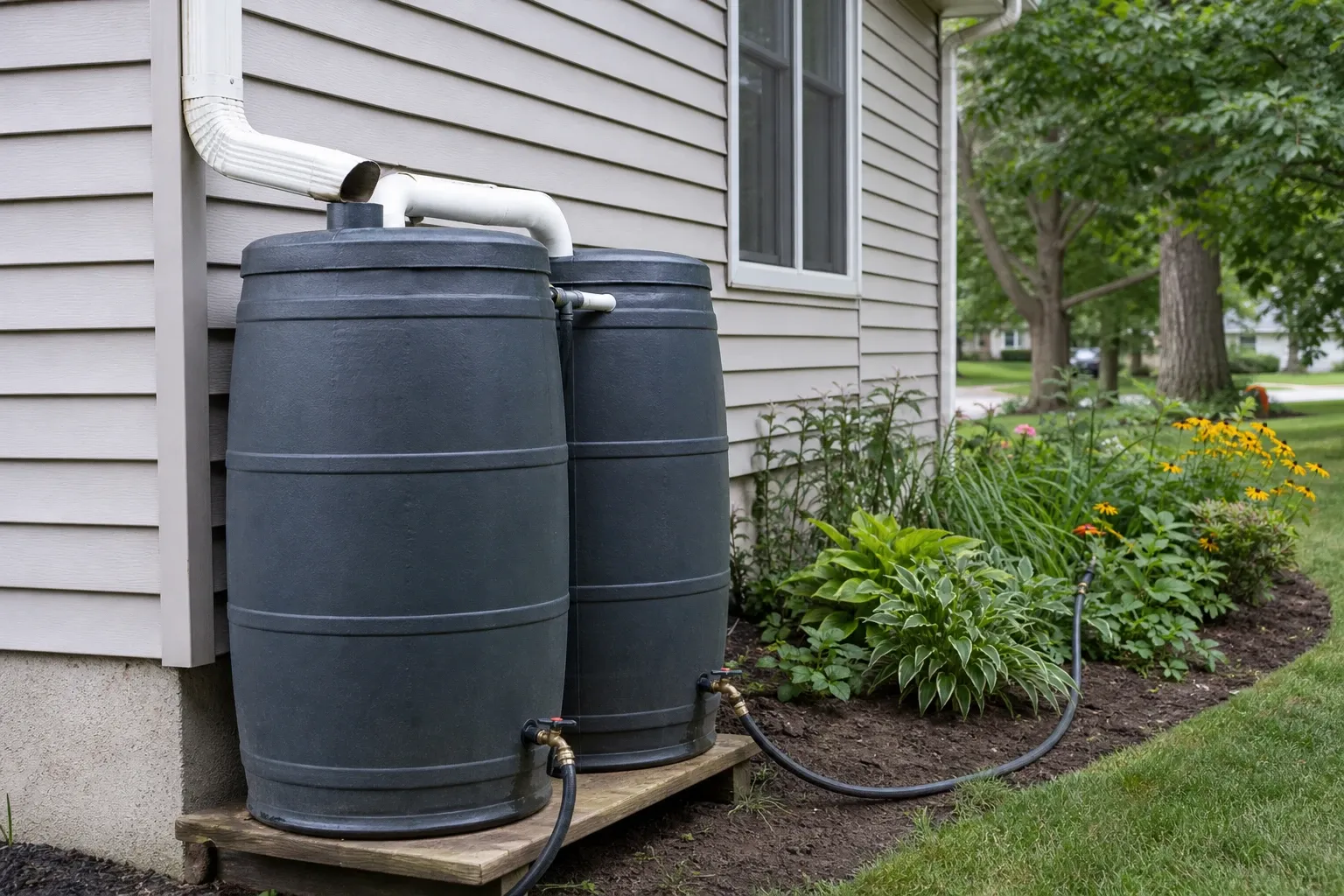
Here’s a plain example. A rain barrel under a downspout, used to water your garden, is allowed in nearly every state. A big cistern (a large storage tank), an underground tank, or a plan to drink the water is where rules can start to apply.
Why do some states restrict rainwater harvesting?
Some states restrict it because of old water-rights law, and because health and building codes cover water used inside a home.
Water rights and the prior appropriation doctrine
The prior appropriation doctrine is a western rule that says the first person to use a water source gets the first claim to it. Under it, rain that would have flowed to a stream was seen as already spoken for by downstream users.
Many states have since relaxed this for household rooftop collection. Rules for larger systems or other land can still differ.
Health and building codes
Plumbing and health codes mostly matter when rainwater enters the house or is used for drinking. Hooking a tank to indoor toilets, for example, can need a permit and an approved setup.
A barrel feeding a garden hose usually sits outside those codes.
What do US states generally allow? A state-by-state summary
Most other states allow home rainwater collection, with local rules on storage size, permitted uses and permits. To look up your own state, use the DOE FEMP state regulations tool. Rules change, so treat the table as a starting point.
| State | What it generally allows | Where to check |
|---|---|---|
| Colorado | Two rain barrels totaling 110 gallons, with conditions on use | State water resources agency (Colorado Division of Water Resources) |
| Utah | Two covered containers up to 100 gallons each without registration; up to 2,500 gallons with registration | State water rights agency (Utah Division of Water Rights) |
| Washington | Rooftop collection is permit-exempt | State Department of Ecology |
| Oregon | Rooftop collection is permit-exempt | State Water Resources Department |
| Nevada | Qualifying residential rooftop collection is allowed | State Division of Water Resources |
How to read the table
Treat each row as a starting point. Exact barrel counts, tank sizes and conditions can change, and counties and cities can add their own rules. Confirm current details with the agency before you buy or build.
How do I check the rules where I live?
Start with your state water resources agency or environmental agency, then check county and city codes.
- Search your state agency’s site for “rainwater” or “rooftop collection.”
- Call or check your county and city building department.
- Read your HOA covenants. They can limit barrel color, visibility or placement.
- Ask about permits if you plan a large cistern, an underground tank or a plumbing connection.
Quick tip: Write down who you spoke to and the date. If rules change, you’ll know what you were told.
If you’re sizing a tank, our guide to rainwater tanks and cisterns covers types and sizes.
Can I drink the rainwater I collect?
Legal to collect doesn’t mean safe to drink, because roofs, gutters and tanks can add dirt, germs and chemicals.
Boiling, bleach and ordinary filters deal with germs or particles. They do not remove metals or chemicals, such as those from roofing, coils, solder, fuel or containers that are not food-grade. If your water may be chemically contaminated, use another safe supply and follow your local health department’s guidance.
For a long-term drinking setup, use treatment certified for the specific contaminants you face, and have the water tested by a certified lab. Repeat the testing over time, because one result is not ongoing proof that the water stays safe.
The simplest legal ground is non-potable use, meaning anything but drinking: gardens, washing the car, flushing. Drinking use may face state or local requirements, so ask your health department.
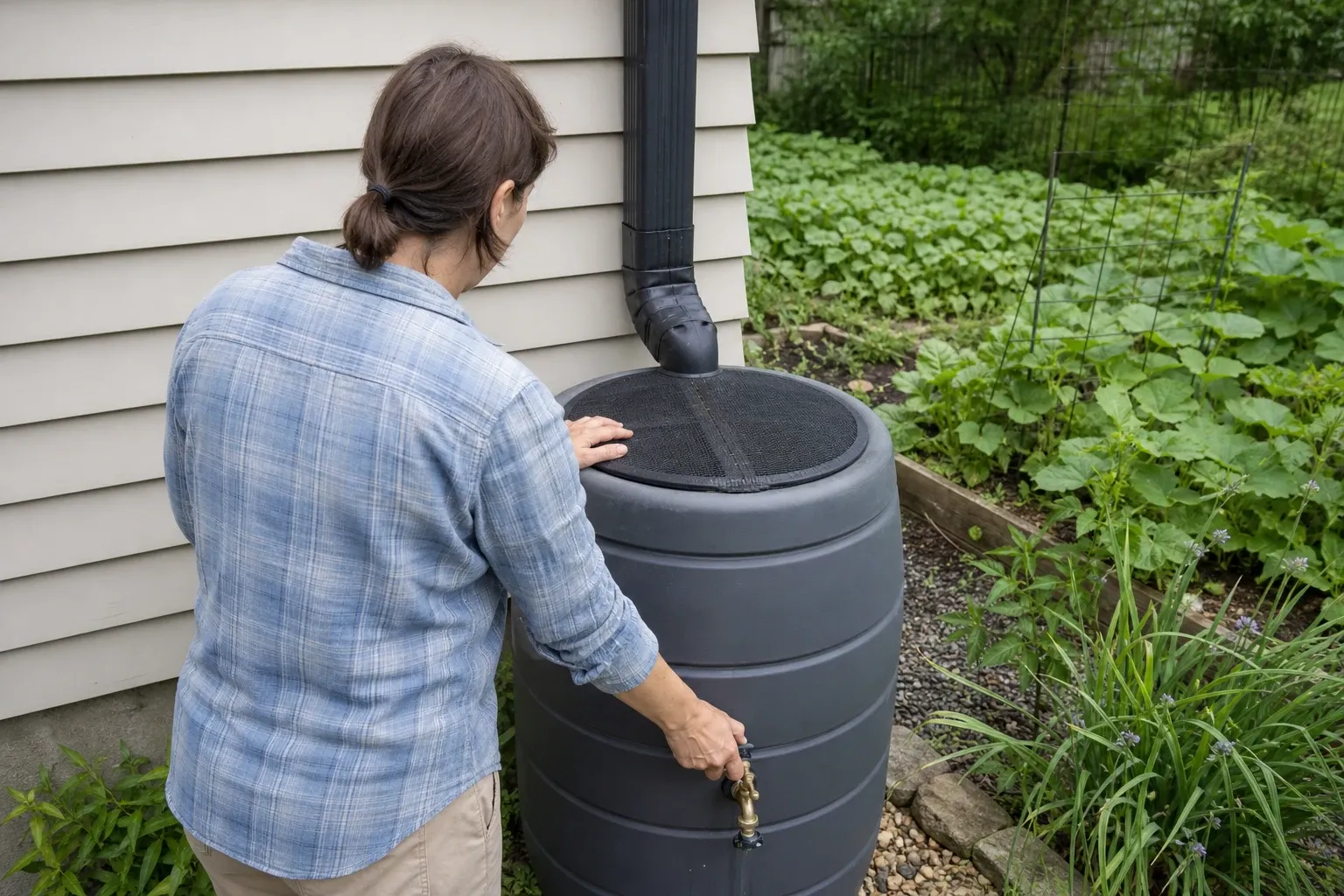
For a garden, a barrel with a mesh screen is a common setup. For a fuller setup, our rainwater harvesting system guide walks through the steps.
What are other ways to get water at home?
Making water from air with a dehumidifier-based unit is a different approach from rain collection, with its own limits.
It needs enough humidity and power. Condensate from a dehumidifier or a home-built unit is not drinking water as collected. Our page on atmospheric water generators explains how they work.
The Water Freedom System is a guide that shows how to build your own unit. The maker says it can help with household water. Its price is $39.69 for the digital guide, paid once. See our Water Freedom System review for details.
Where to go next
Rainwater rules are usually simple for a barrel and more involved for big tanks or indoor use. Our rainwater harvesting hub covers the full setup. If you want to build one yourself, see the DIY rainwater harvesting plan. Then confirm your local rules before you start.
Questions people ask
How many rain barrels can I have?
It depends on where you live. Colorado, for example, allows two barrels totaling 110 gallons with conditions, while many states set no limit. Check your state agency and local codes for the current number before you buy more.
Do I need a permit for a rain barrel?
Usually not for a simple barrel under a downspout. Permits are more likely for large cisterns, underground tanks or plumbing connections. Call your county or city building department to confirm what applies to your setup.
Can my HOA ban rain barrels?
An HOA can often set rules on barrel size, color, visibility or placement, even where state law allows collection. Read your covenants and ask the board before installing. Some states also have laws about HOA limits, so check yours.