Some links on this page are affiliate links: we may earn a commission if you buy, and your price doesn't change. Details
Alongside stored water and a plan for treating it, some households add a home-built water-from-air unit as an extra source.
See the Water Freedom System guide on the official site60-day money-back guarantee
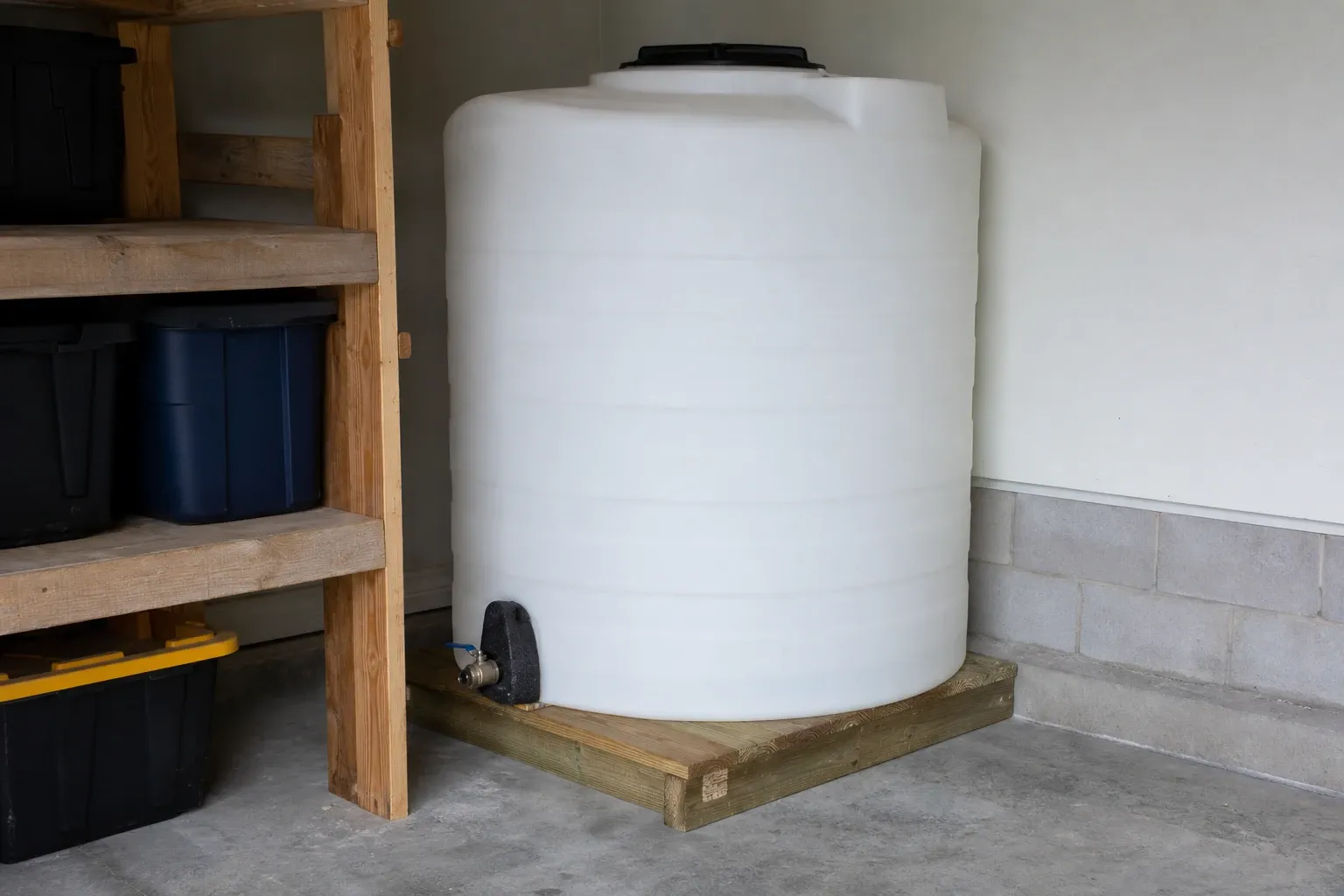
What size emergency water tank does my household need?
An emergency water storage tank should hold about 1 gallon per person per day for the number of days you want to cover. Plan on at least 3 days, and two weeks if you can. Add extra for pets and any medical needs.
Start with days of cover, not the tank you happen to find. Then round up to the next common tank size.
A worked example for a family of four
A family of four needs at least 56 gallons for two weeks of drinking and basic hygiene. The sum is 4 people x 1 gallon x 14 days = 56 gallons.
That fits in one 55-gallon barrel plus a few jugs. Round up, and a 65-gallon or two-barrel setup gives you some slack for spills and pets.
Drinking water versus water for washing and flushing
Water for washing and flushing adds a lot to the total. Many households plan on 3 to 5 gallons per person per day once they count dishes, a wash and toilets, which is a planning estimate, not a fixed rule.
At 4 gallons each, four people over 14 days is 224 gallons. That is why a 250-gallon tank is a common middle size for a whole-home plan. Water meant only for flushing doesn’t need to be drinking quality, but keep it labeled and separate from your drinking supply.
Which tank materials are safe and durable for storing water?
Food-grade polyethylene, stainless steel and some fiberglass tanks can all hold drinking water, if the product is made for it. Look for a label saying food-grade or certified to NSF/ANSI 61, a standard for materials that touch drinking water. Check the maker’s spec sheet before you buy.
Avoid used chemical drums, fuel containers and any container that wasn’t food-grade. Residue can soak into the plastic, and washing can’t reliably remove it.
Food-grade polyethylene
Polyethylene is the usual pick because it is light, cheap and doesn’t rust. Choose opaque or dark tanks, since less light means less algae. Cheaper clear plastic yellows in sun, so keep it shaded. This suits most homeowners and homesteaders.
Stainless steel
Stainless steel lasts a very long time and resists light and heat. It costs much more and is heavy, so it suits permanent installs where budget isn’t tight. Skip it if you may need to move the tank.
Fiberglass and other options
Fiberglass tanks are strong and often used for buried or large installs. They cost more than polyethylene and are harder to repair at home. Confirm the inner lining is rated for drinking water.
Bladders and collapsible tanks
A water bladder (a flexible bag) packs flat and holds from a few dozen to several hundred gallons. It suits renters and short-term use. It can puncture and needs a smooth, flat base. For a bathtub version, see our bathtub and bladder storage guide.
Emergency water storage tanks compared: sizes, materials and costs
The table below compares common emergency water storage tank types by size, material, rough cost and freeze risk. Prices are ballpark estimates and vary by region and year, so check local quotes.
| Type | Typical capacity | Material | Rough price (estimate) | Best location | Freeze risk | Main drawback |
|---|---|---|---|---|---|---|
| 55-gallon barrel | 55 gal (about 460 lb full) | Polyethylene | $60 to $120 | Garage, basement | Low indoors | Small for whole-home needs |
| Stackable container | 5 to 30 gal | Polyethylene | $15 to $60 each | Closets, tight spaces | Low indoors | Many pieces to manage |
| Poly tank, 250 gal | 250 gal (over 2,000 lb full) | Polyethylene | $300 to $700 | Garage, shed, pad | Medium | Heavy; needs a properly built base |
| Poly tank, 100 to 500 gal | 100 to 500 gal | Polyethylene | $200 to $1,000 | Outdoors with shade | Medium to high | Needs level base |
| IBC tote | 275 to 330 gal | Polyethylene in a metal cage | $100 to $300 (new, food-grade) | Shed, shaded pad | High | Clear walls grow algae; check food-grade |
| Tank, 1,000 gal or more | 1,000+ gal | Polyethylene or fiberglass | $1,000 and up | Outdoors, buried | High above ground | Cost, space, permits |
| Stainless steel | 50 to 500 gal | Stainless steel | $500 to $3,000+ | Permanent install | Medium | Price |
| Bladder | 50 to 500 gal | Flexible fabric | $100 to $600 | Flat indoor floor | Medium | Can puncture |
A rain barrel is not the same thing. It is made for garden water, so use it as a source for flushing, not drinking. See rainwater tanks and cisterns for sizing.
Where should I put an emergency water tank?
Put an emergency water tank on a level, strong surface, out of direct sun, away from fuels and chemicals. Water weighs about 8.3 pounds per gallon, so 250 gallons is over 2,000 pounds. Plan for that load.
Indoors, garage or basement
A garage or basement keeps a tank cool and dark, but a large tank needs a base that matches the tank maker’s instructions. Follow those instructions for the base, and ask a structural pro before putting a large tank on an upper floor or any floor you are unsure about. Leave room to reach the spigot and a drain path in case of leaks.
Outdoors and above ground
A tank outdoors needs a level pad built to the tank maker’s base instructions, not bare soil. Shade it, since sun warms water and feeds algae. Keep a screened overflow and a spigot you can reach with a bucket.
Underground cisterns
Buy only tanks rated for burial, and set them below the frost line, where they stay cool and avoid freezing. They cost more and need digging, and local codes may require permits for large or buried tanks. Check with your county before you start.
How do I keep a water tank from freezing?
To keep a water tank from freezing, put it indoors where you can, and protect the valves and spigot first. Ice usually cracks fittings before it cracks the tank wall. Insulation only slows freezing, so it won’t save a tank in a long hard freeze.
Here is a simple winter checklist:
- Wrap the tank and any outdoor pipes in insulation.
- Use heat tape or other heat products only if they are rated for this use, and follow their instructions.
- Leave a bit of headspace, so ice has room to expand.
- Drain exposed hoses and leave the valve slightly open.
- Ask a licensed electrician for anything beyond plugging in a cord.
In warm climates the problem flips. Heat and light grow algae, so shade matters more than insulation.
How do I fill, treat and rotate stored water so it stays drinkable?
Start with a source that is already safe to drink, such as treated municipal tap water, and fill through a hose made for drinking water. Don’t fill a drinking tank from a roof, a rain barrel, a well you haven’t tested or a flooded area.
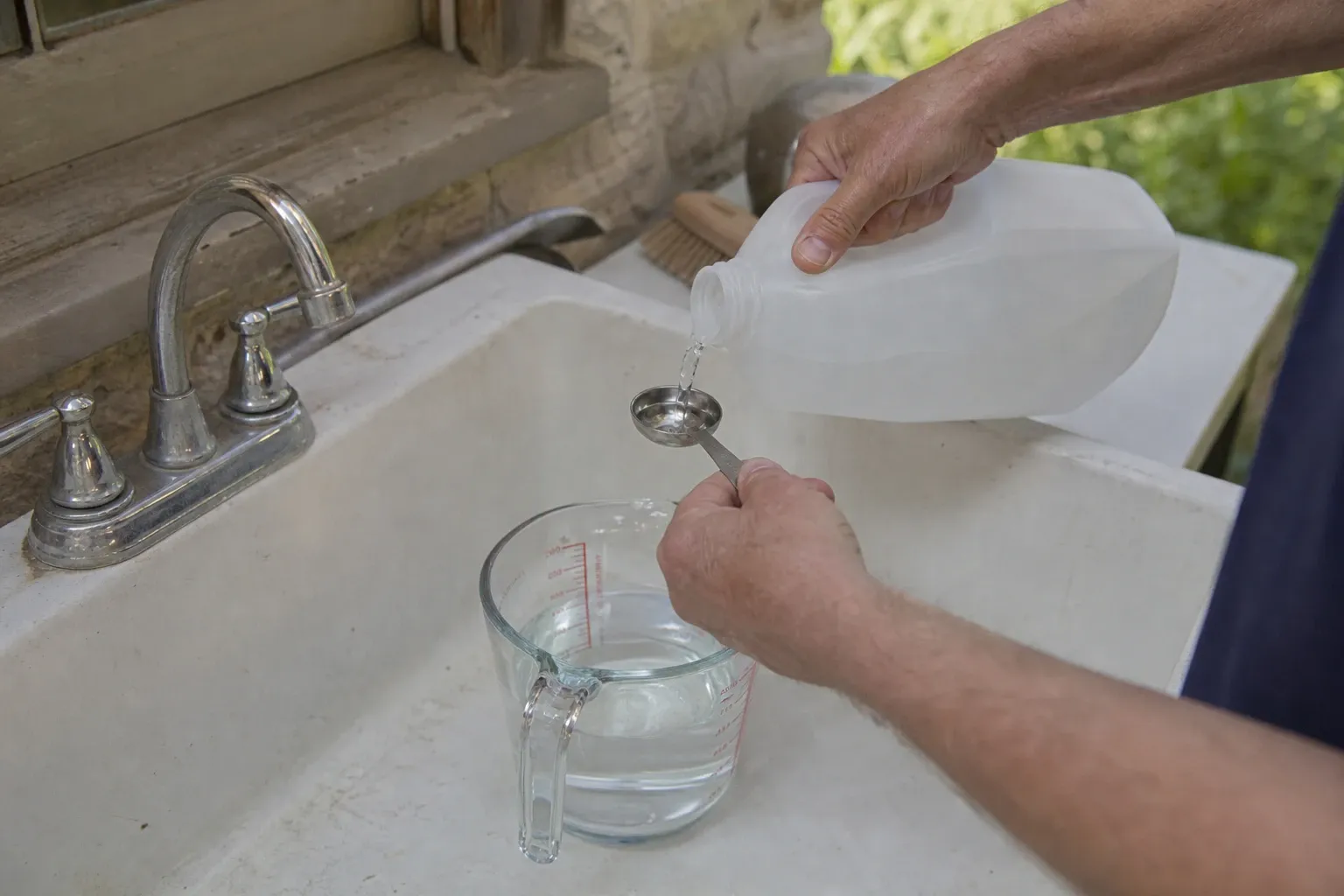
Sanitize the tank and any containers before first use. The CDC steps are: wash with dish soap and rinse with clean water, then sanitize with a solution of 1 teaspoon of unscented household bleach per quart of water, swish it so it touches every surface, let it sit, and rinse with clean water.
For treatment, know what you are fighting. Boiling, unscented bleach and ordinary filters deal with germs or particles. They do not remove metals or chemicals, such as those from roofing, coils, solder, fuel or non-food-grade containers. If your water may be chemically contaminated, use another safe supply and follow your local health department’s guidance.
If you plan a long-term drinking setup from a non-municipal source, use treatment certified for the specific contaminants you have, and have the water tested by a certified lab. Repeat the test over time, since one result is not ongoing proof.
Follow any preservative’s label. Replace stored water about every six months. For a plan around containers, see our emergency storage water guide.
Write the fill date on tape on the tank, then set a phone reminder for six months.
Can I make extra water at home to top up my storage?
A dehumidifier-based atmospheric water generator can collect some water, but it can’t replace a stored supply. Output depends on humidity and temperature, and dry or cold air gives little. Condensate from a dehumidifier or a home build is not drinking water as collected, so don’t drink it without proper treatment and testing.
The Water Freedom System is a guide, not a machine, for building your own unit. The maker says a home build can make up to 60 gallons a day, but the maker hasn’t published independent output tests. Our Water Freedom System review covers what the guide includes.
For how these units work, see atmospheric water generator basics.
How does this fit with a full emergency water plan?
A tank is one part of a plan that also includes smaller containers, treatment and rotation. Our emergency storage water guide covers the full plan, from amounts to treatment. If you need portable options too, the emergency water storage container comparison covers jugs, barrels and pouches.
Pick your target days of cover first, then choose the size. Check the tank maker’s base instructions before you order.
Questions people ask
How long can water be stored in a tank?
Water from a safe source in a clean, closed, opaque tank keeps best when stored cool and dark. Plan to replace it about every six months, label the fill date, and re-treat it if it has sat longer.
Can I use a rain barrel as emergency drinking water storage?
A rain barrel is built for garden water, not drinking. It’s fine for flushing or washing in an emergency. Rain from roofs can carry metals and chemicals that boiling, bleach and ordinary filters don’t remove, so use another safe supply for drinking and follow local health department guidance.
How do I stop algae growing in a water storage tank?
Algae needs light and warmth. Use an opaque or dark tank, keep it shaded and cool, and keep the lid and vents screened. Sanitize the tank before first use and again when you refill it.