Some links on this page are affiliate links: we may earn a commission if you buy, and your price doesn't change. Details
Is dehumidifier water safe to drink?
No, dehumidifier water is not safe to drink as collected. It’s fine for several other jobs, and the rest of this page covers them.
Why it is not drinking water as collected
A dehumidifier pulls room air across cold evaporator coils (part of its refrigeration system). Water vapor turns to liquid on the coils, a process called condensation, and the liquid (condensate) drips over metal, plastic and a pan that were never made for drinking water. The collection bucket is often warm and damp, which is where microbes like to grow.
Think of it like a bottle left in a hot car: the water may look fine, but it isn’t.
What can be in it
Condensate can carry bacteria, mold, algae, dust and metal residue from coils and solder. Plastics that aren’t food-grade can add chemicals too. You can’t see most of this.
Boiling won’t remove metals or chemicals. If someone has already drunk it, or you need a firm answer, call your local health department or a certified lab.
What can you safely use dehumidifier water for?
Dehumidifier water works well for plants, flushing and cleaning, as long as you use it fresh.
Good uses
- Watering ornamental plants and lawns
- Flushing toilets (pour it into the bowl)
- Mopping and general cleaning
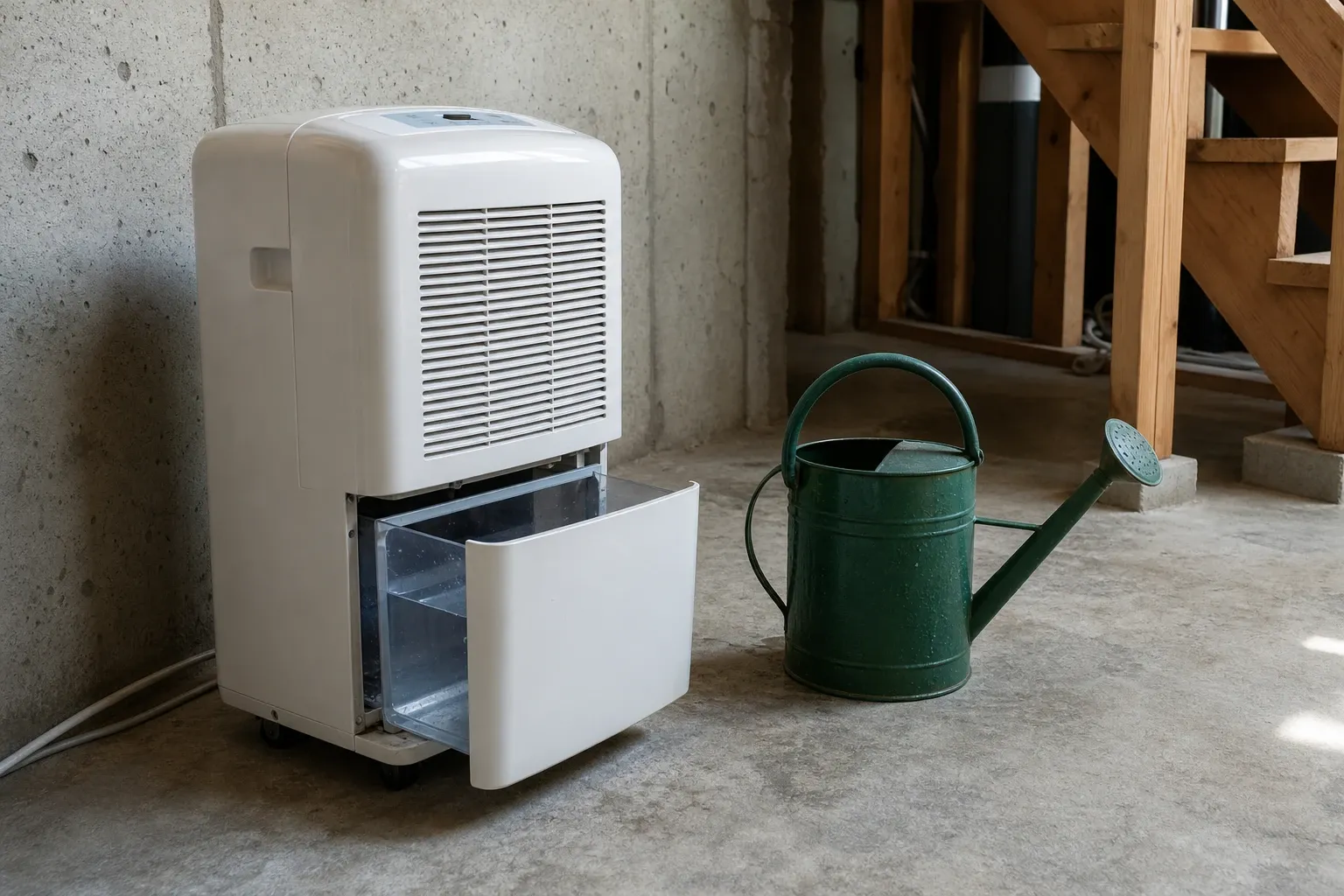
Quick tip: Keep a labeled watering can by the dehumidifier and use the water the same day.
Uses to avoid
- Drinking or cooking
- Pet bowls and baby formula
- CPAP machines and humidifiers
- Edible plants, especially leaves and produce you eat raw
Don’t store it long in a sealed container. Microbes multiply, and the smell tells you it’s gone off.
Can you filter the water from a dehumidifier to make it drinkable?
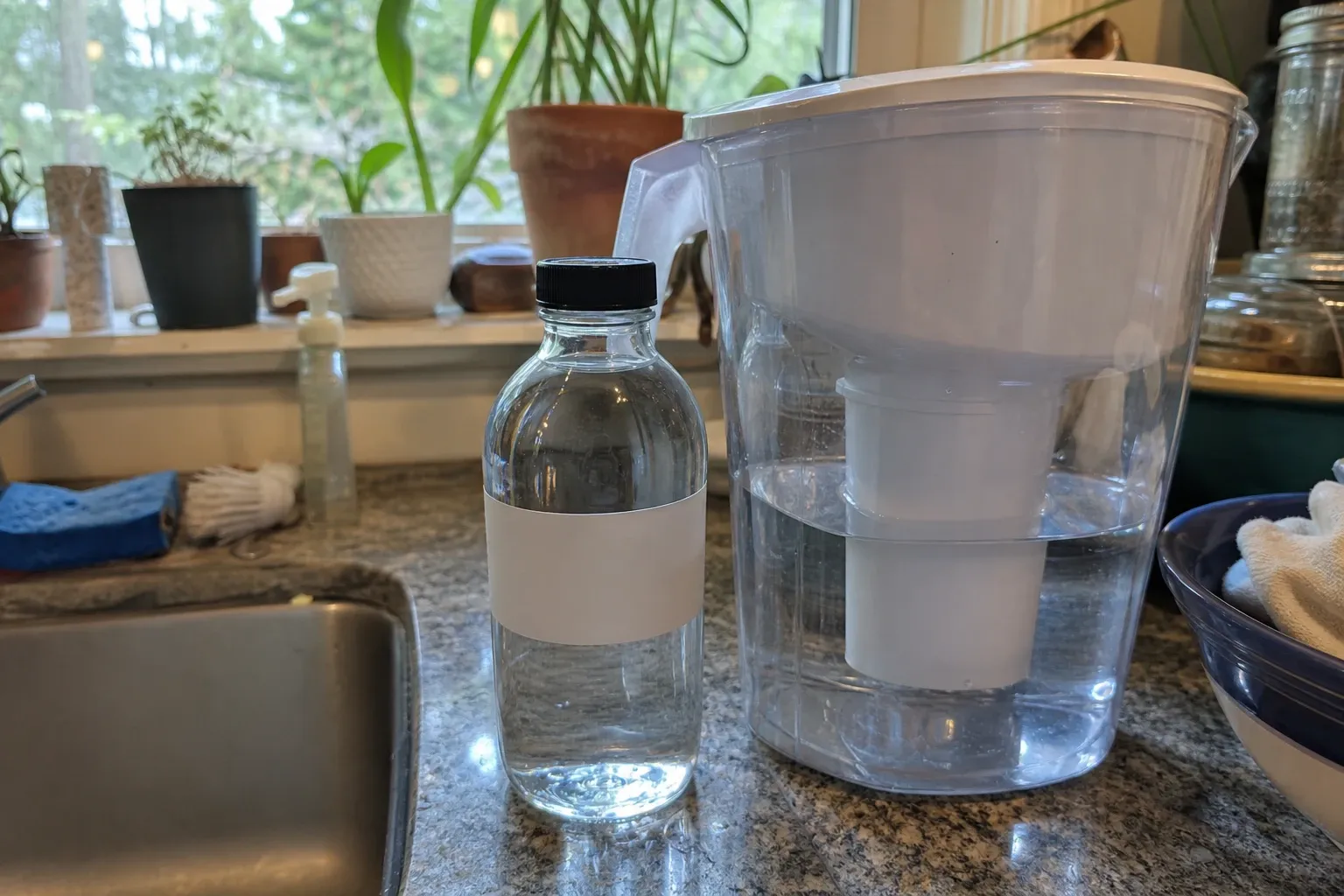
No. A filter, boiling or bleach does not make dehumidifier water drinkable. Filters differ in what they remove, and none cleans up the surfaces the water touched.
Why treatment alone is not enough
A household filter may catch particles or some microbes, depending on its rating. Boiling and bleach kill germs. None of these reliably removes metals or chemicals picked up from coils, solder, drip pans or plastic parts.
When drinking could even be considered
This page is about non-drinking uses. Drinking is only worth considering if every part the water touches is drinking-water safe, the treatment fits the contaminants actually present (for example, a filter certified to NSF/ANSI 53 for lead), and a certified lab test confirms the result. If you can’t meet all three, don’t drink it. Use water from a proper source instead.
For wider treatment options, see our guide to an off-grid water purification system.
Where is the dehumidifier filter, and can you run it without one?
The filter in a dehumidifier is an air filter, not a water filter, and it usually sits behind the intake grille.
Finding and cleaning the air filter
Look at the back or side of the unit. It’s a washable mesh panel. Check your manual for the exact spot.
Rinse it every few weeks, let it dry, and replace it if it’s torn. It protects the coils from dust. It does nothing for the water.
Running without a filter
You can run a dehumidifier without its filter, but you shouldn’t. Dust clogs the coils, collection drops, and the water gets dirtier.
How much water should a dehumidifier collect, and how soon does it start?
A dehumidifier collects different amounts depending on climate, humidity, temperature, room size, fan speed and rated capacity in pints per day.
| Factor | Effect on collection |
|---|---|
| Relative humidity (how full of water the air is) | Higher means more water |
| Climate and room temperature | Cold rooms mean less; frost can form on coils |
| Room size | Bigger rooms need more run time |
| Fan speed | Faster moves more air |
| Rated pints per day | Lab-condition figure, not a promise |
| Dirty filter | Cuts airflow and output |
Water usually shows up within a few hours of startup. Cool or dry rooms take longer, and results vary.
Is a lot of water normal?
A lot is often normal in a damp basement. Several gallons a day from one room may point to a moisture source, like a leak or a wet crawl space, worth checking.
Why is it collecting so little?
Check these in order:
- Humidistat set too high
- Room too cold, with frost on the coils
- Collection bucket full or out of place
- Dirty air filter
- Air simply isn’t humid
A continuous drain hose avoids emptying the bucket, but the water then goes down the drain and you lose the chance to use it.
Does a dehumidifier remove mold from the air?
A dehumidifier slows mold and mildew by lowering humidity, but it doesn’t kill mold or reliably pull it from the air.
Spores can settle on a dirty filter, coils or bucket, so clean those regularly. Mold that’s already growing needs cleaning and a fix for the moisture. Humidity level matters most, so a cheap hygrometer helps.
What about home builds that use a dehumidifier to make water?
Home-build condensate is not drinking water as collected, for the same reasons as a store-bought dehumidifier. Treat it as water for plants, cleaning and flushing.
Food-grade parts and materials
Check every surface the water touches, including coils, tubing, tanks and the collection bucket. Even then, parts that look safe can add metals or chemicals. An atmospheric water generator label isn’t proof of safety either. Our guide to DIY atmospheric water generators covers the limits.
Drinking is a separate question
The Water Freedom System guide is a step-by-step resource for building your own dehumidifier-based unit. The presentation says it can make up to 60 gallons a day, and its manual calls the water ‘completely pure’. Independent output tests haven’t been published, so treat water from a home build as non-drinking until a certified lab test confirms it.
See how atmospheric water generators differ from dehumidifiers.
See the Water Freedom System guide on the official site60-day money-back guarantee
Checklist: before you use dehumidifier water
This checklist covers daily habits for safe non-drinking use.
- Label the bucket non-drinking.
- Empty daily, clean weekly, keep the air filter clean.
- Use for plants, cleaning and flushing only.
- Keep it off edible plants.
- Call the health department or a certified lab if anyone has drunk it.
Where this fits with atmospheric water generators
Dehumidifiers and atmospheric water generators both pull water from air, but only finished drinking-water units are built to treat their own water. Follow the maker’s instructions and filter schedule for those. Our atmospheric water generator overview compares options, and how atmospheric water generators work explains the process step by step.
Questions people ask
Can I drink dehumidifier water in an emergency?
It’s not a good source. Boiling kills germs but doesn’t remove metals or chemicals from coils and pans. Use stored water or another safe source, and ask your health department if you’re unsure.
Can I use dehumidifier water in a humidifier or iron?
Better not. Microbes and residue can end up in the air you breathe or clog the appliance. Check the appliance manual, which usually calls for distilled or manufacturer-approved water instead.
Is there a dehumidifier that makes drinking water?
Standard dehumidifiers aren’t built for drinking. Some atmospheric water generators are designed to treat their own water. Follow the maker’s instructions and filter schedule.