Some links on this page are affiliate links: we may earn a commission if you buy, and your price doesn't change. Details
How do you purify water off-grid so it is safe to drink?
You purify off-grid water by identifying the source, clearing it, filtering it, killing germs, and storing it safely. Before you rely on it as a long-term drinking setup, you assess the source and test the water.
Water from a creek, rain tank, well or dehumidifier is not drinking water until it has been collected in food-safe containers and treated.
Clear water is not the same as safe water
Clear water can still carry germs and chemicals, because clarity only tells you about sediment. There are three hazards to keep apart:
- Germs: bacteria, viruses and protozoa (tiny single-celled parasites).
- Sediment: silt, leaves, grit.
- Chemicals: pesticides, lead, nitrate and similar.
Example: a clean-looking spring near a pasture may carry livestock germs and nitrate. Boiling handles the first, not the second.
Boiling, bleach and ordinary filters deal with germs or particles. They do not remove metals or chemicals, such as those that can come from roofing, coils, solder, fuel or non-food-grade containers. If your water may be chemically contaminated, use another safe supply and follow your local health department’s guidance.
The usual order: collect, pre-filter, filter, disinfect, store
The usual order is collect, pre-filter, filter, disinfect and store, because each step protects the next. Settling or straining first keeps your filter from clogging and helps disinfectants work. Only a certified lab test tells you what is actually in your water.
Which method removes what? Filters, boiling, UV and chemicals compared
Each method fixes some problems and leaves others, so match the method to the hazard. The table gives general patterns. Check your own product’s label and its NSF/ANSI certification (an independent standard for filter claims).
| Method | Addresses | Usually misses | Power | Upkeep | Best source |
|---|---|---|---|---|---|
| Boiling | Bacteria, viruses, protozoa | Chemicals, metals, sediment | Fuel or fire | Fuel | Clear or strained water |
| Gravity or pump filter (ceramic filter, hollow fiber) | Protozoa, most bacteria; some reduce sediment | Often viruses; most chemicals | None | Cleaning, cartridge swaps | Creek, rain |
| Activated carbon | Some chemicals, taste, odor | Germs on its own | None | Replace on schedule | Pre-treated water |
| UV purifier | Germs, if water is clear | Chemicals, metals; weak in cloudy water | Batteries or solar | Lamp or battery care | Clear, filtered water |
| Household bleach, chlorine dioxide, iodine | Bacteria, viruses; some protozoa vary by product | Chemicals; hardy cysts may survive | None | Fresh stock, correct dose | Clear water |
| Solar disinfection | Some germs, slowly | Chemicals; weak if cloudy | Sunlight | Clear bottles | Last resort |
| Distillation | Many germs, metals, minerals | Some volatile chemicals that can carry over with the steam | Heat | Fuel, cleaning | Small batches when a certified-lab-tested source is unavailable and the still is food-grade |
| Reverse osmosis | Many chemicals and metals | Needs pressure; wastes water | Often pump or pressure | Membrane changes | Wells with chemical concerns |
The EPA explains how to disinfect water with household bleach and boiling, and that guidance is about germs, not chemicals.
How to purify water at home without electricity
You can purify water without power by boiling, filtering by gravity, or adding bleach, in that order of simplicity. Always clear cloudy water first.
Boiling: time and altitude
Boiling works by a rolling boil for 1 minute, or 3 minutes above 6,500 feet, per the CDC’s steps for making water safe in an emergency. Let it cool and keep it covered in a clean container. Suits anyone with fuel. Boiling does not make water chemically safe, so don’t use it as your only step if chemicals are a worry.
Gravity filters and pump filters
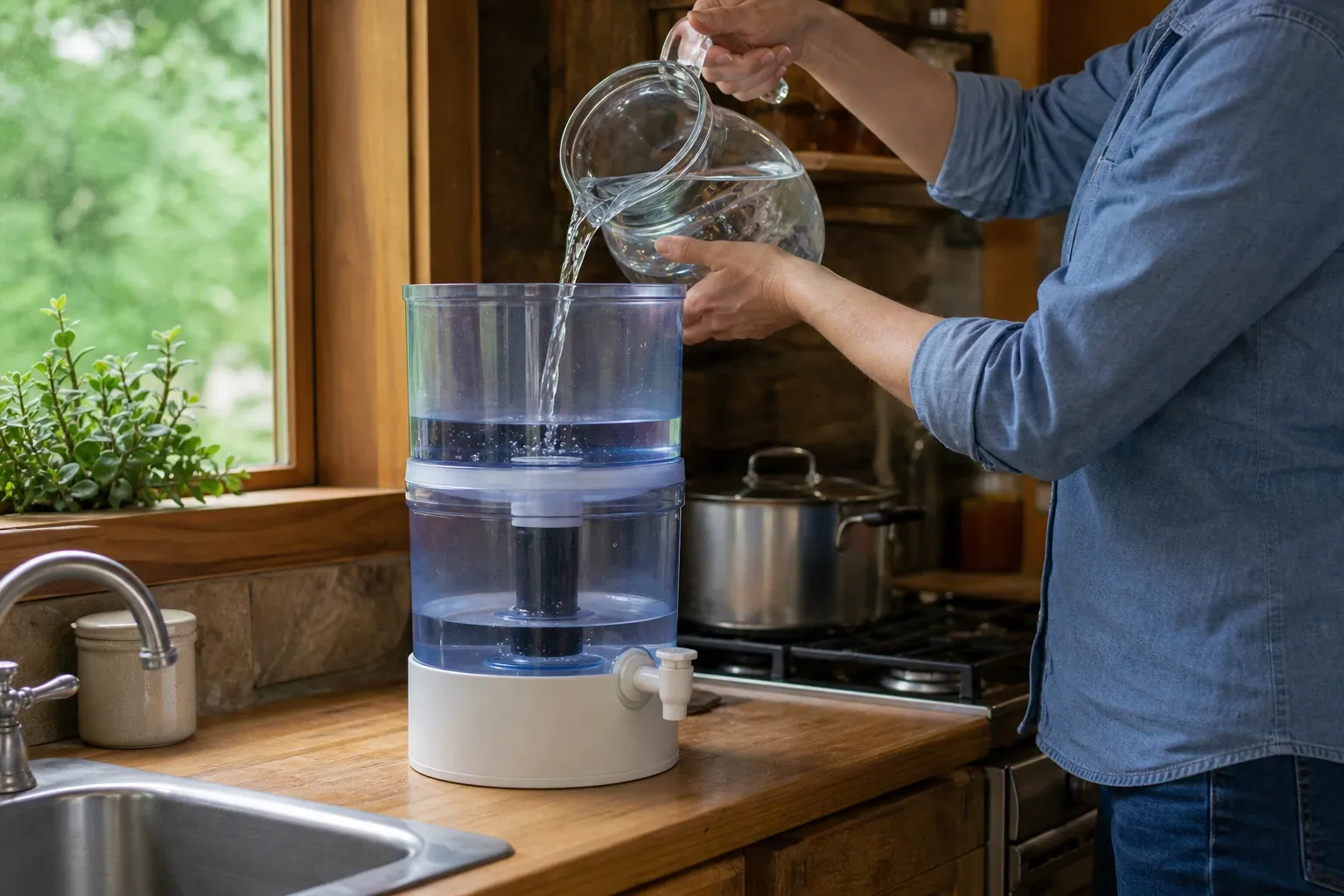
Gravity and pump filters remove protozoa and most bacteria when the pore size is small enough. Look for NSF/ANSI certification for the claim you need, and follow the maker’s cleaning and replacement schedule. Many don’t stop viruses, so add a disinfecting step for creek or pond water.
Quick tip: Write the cartridge swap date on the filter with a marker.
Household bleach and other chemical disinfection
Unscented household bleach disinfects clear water when you follow dosing and wait time. Use the EPA’s bleach instructions and read the label for strength. Cloudy water must be settled or filtered first. Chlorine dioxide and iodine tablets follow their own labels. Iodine isn’t for everyone, so check the label. Bleach does not remove chemicals or metals.
Solar disinfection and why it is a last resort
Solar disinfection means leaving clear bottles of clear water in strong sun. It is slow, depends on weather, and does nothing for chemicals. Use it only when boiling and chemicals aren’t available.
How do the Amish purify water?
There is no single documented Amish method, since practice varies by community. Common approaches include boiling, sand or cloth filtering and well testing, which match the methods above.
Traditional ways are fine only if they address the hazards of your specific source. A sand filter helps with sediment, but it won’t make a pond safe alone. Example: cloth-strain, then boil, handles sediment and germs from a clear creek, but a creek without nearby farm runoff can still carry chemicals or metals, so test it before you rely on it.
What to use for rain, creek, well and dehumidifier water
The right treatment depends on where the water came from. Start with the source, then pick the steps.
Rainwater from a roof
Roof rain needs a first-flush diverter (a device that dumps the first dirty runoff), filtering, then disinfection. Roofs add bird droppings and residues, and roofing materials can add metals. See our guide to a filter for rainwater harvesting.
Creek or pond water
Creek or pond water needs the full sequence: settle, pre-filter, fine filter, then disinfect. A gravity filter alone is not enough, since viruses may pass through. Runoff or upstream use can add chemicals that none of these steps remove.
Well water
Private wells are not regulated by the EPA, so owners are responsible for testing. Test with a certified laboratory at least once a year, and after floods. One clean result is not ongoing proof, so repeat tests over time.
Dehumidifier or air-to-water condensate
Dehumidifier water, or condensate from a home build, is not drinking water as collected. Use it for plants, cleaning and flushing. Coils, pans and plastics can add metals and microbes. Boiling, bleach or a household filter won’t remove metals or chemicals. It only becomes a drinking option if every wetted part is drinking-water safe, treatment is certified for the specific contaminants and a certified lab test confirms it. Read more on dehumidifier water collection.
Where each method falls short and when to test
Every method has gaps, and testing shows which gaps matter for your water.
Chemical and heavy metal contamination
Boiling doesn’t remove chemicals or metals, and it can concentrate some as water evaporates. Activated carbon and reverse osmosis can reduce certain chemicals, but only per their certification. UV does not remove chemicals. Where water may be chemically contaminated, use another safe supply and follow local health department guidance. For a long-term drinking setup, choose treatment certified for the specific contaminants found, and have a certified lab test the water again over time.
Maintenance failures, clogged or expired filters
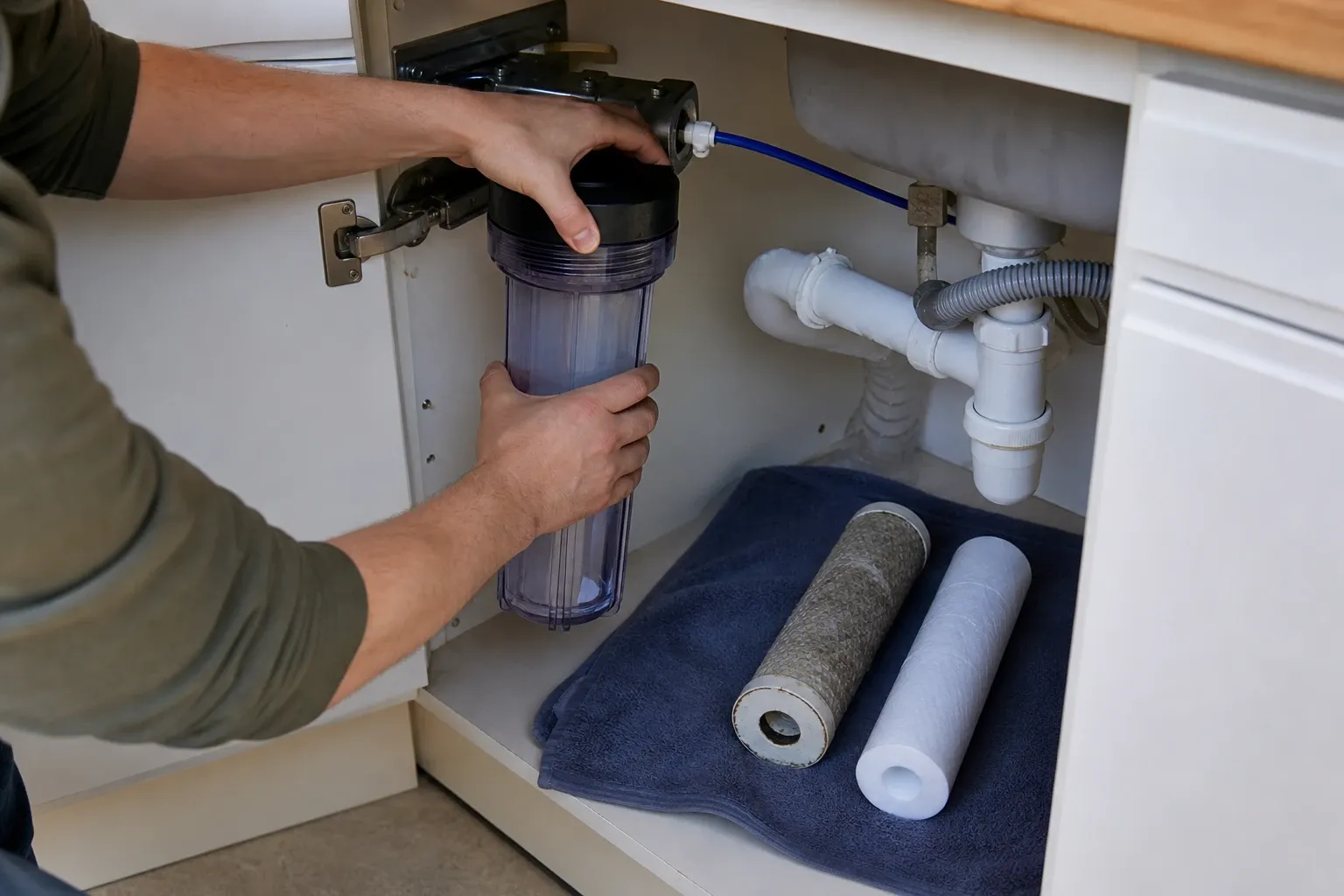
Filters can fail without warning when cartridges are overdue or cracked. Keep spares and a cleaning schedule. Store treated water in clean, food-safe containers and rotate it. The CDC advises replacing stored water every six months.
When to call the health department or a certified lab
Call the local health department or a state-certified laboratory after floods, if farming or industry is nearby, or if anyone in the household gets sick. Ask which tests fit your area.
Building a layered off-grid system for your home
A layered system uses several steps, each with a backup. Three sample layouts:
- Rain: first-flush diverter, tank, sediment filter, certified fine filter, bleach or UV, food-safe storage.
- Creek: settling bucket, cloth strain, gravity filter, boil or bleach, covered containers.
- Minimal backup: unscented bleach, a clean cloth, a pot and fuel.
Plan a backup for each step if power or a cartridge fails. Any water made from air by a home build is one more source to treat and test the same way. For one example of a DIY approach, see our Water Freedom System review.
Where does this fit in a whole off-grid water plan?
Purification is one part of an off grid water supply system, alongside collection and storage. For water from air, see how to make water from air without electricity and our page on the atmospheric water generator. Pair them with the steps above so every source gets the same care.
Questions people ask
Can I drink rainwater after boiling it?
Boiling kills germs in rainwater, but it won’t remove roof residues or metals. Filter out debris first, boil for 1 minute (3 above 6,500 feet), and store it covered. If chemicals are a worry, use another safe supply and ask a certified lab about testing.
How long does bleach-treated water need to sit?
Bleach needs contact time to work, and the dose depends on your bleach strength and water clarity. Follow the EPA instructions and your bottle’s label. Cloudy water should be filtered first. Bleach does not remove chemicals or metals.
Does UV remove chemicals?
No. A UV purifier targets germs, and only when the water is clear enough for light to reach them. It doesn’t remove chemicals, metals or sediment, so pair it with a pre-filter and, if needed, certified carbon or reverse osmosis.