Some links on this page are affiliate links: we may earn a commission if you buy, and your price doesn't change. Details
Water Freedom System: A $39.69 step-by-step guide (PDF and videos) to building a home water-from-air unit around a store-bought dehumidifier, plus four bonus books.
See the Water Freedom System guide on the official site60-day money-back guarantee
How do you make air into water with sunlight?
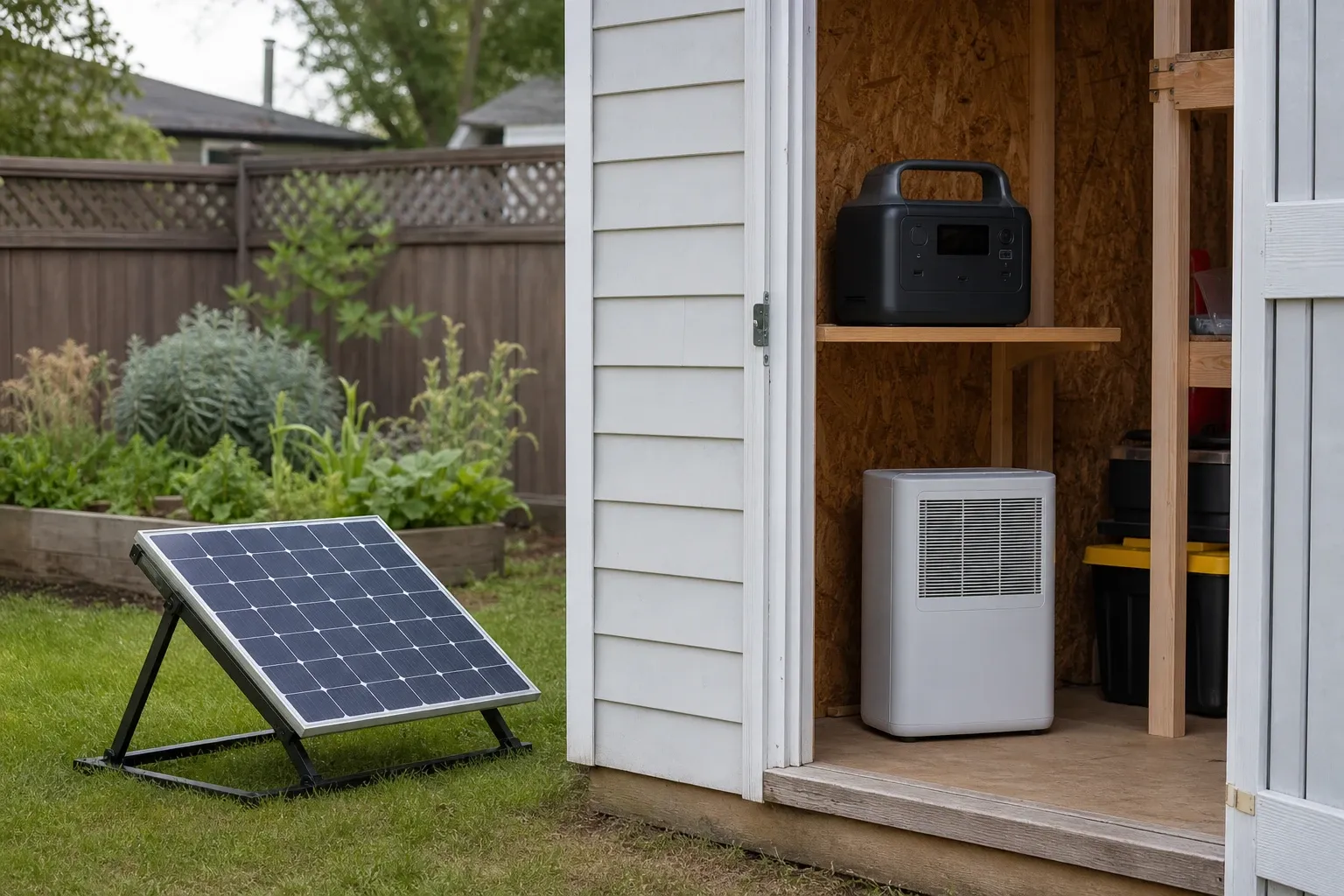
You make water from air by cooling humid air until it drops its water, and sunlight can supply the electricity for that cooling. A solar panel feeds power to a dehumidifier, and the dehumidifier does the work.
Condensation: the idea in plain words
Condensation is water vapor turning back into liquid when air is cooled below its dew point. Think of the drops on a cold glass of lemonade on a summer day. A dehumidifier has a cold coil that does the same thing, all day long.
Why a dehumidifier is the easiest DIY route
A dehumidifier is a ready-made condenser, fan and collection tank in one box. You only need to feed it power and handle the water properly. Relative humidity (how full of vapor the air is, as a percent) drives output. Dry air gives very little water, and a cool, dry garage gives less than a warm, damp porch.
Solar-heated desiccant builds (zeolite, silica beads) compared
An adsorbent is a material that grabs water vapor on its surface. Zeolite and silica beads soak up vapor at night, then release it when heated by the sun. These passive builds need no panel, but they are slow and low-output. If that route interests you, see making water from air without electricity.
What do you need for a solar dehumidifier water generator?
A solar dehumidifier build needs seven core parts, and the power gear is only half the job. Anything that touches the water matters just as much.
Parts and materials list
- A dehumidifier (a compressor model is common)
- Solar panel or panels
- Charge controller, which sits between the panels and the battery and keeps the battery from overcharging
- Battery (deep-cycle type)
- Inverter, which turns the battery’s DC power into the AC power a standard dehumidifier needs (skip it only if your unit runs on DC)
- Stainless or food-grade collection tank and tubing
- Fuses, cabling and a mounting frame
Here is how the power flows: the panels charge the battery through the charge controller, and the inverter then runs the dehumidifier from the battery. In daylight, panels can feed the unit through the same chain. Anything beyond plugging parts together, like wiring a battery bank to a home circuit, is a job for a licensed electrician.
Heat sink and cooling side vs. heating side in adsorbent designs
A passive adsorbent design needs a glazed (glass-covered) heating side, where the sun drives vapor out, and a heat sink, a metal part that stays cooler so the vapor condenses on it. A dehumidifier build skips this. It’s one reason many homeowners choose it.
How big a solar panel do you need? A worked example
To size a solar panel, work out daily watt-hours, add an allowance for losses, then divide by your peak sun hours. Peak sun hours are the number of hours per day that sunlight would need to shine at a standard strength (1,000 watts per square meter) to deliver the same total energy your location actually gets. You can look them up for your area from local solar data.
Step 1: Find the dehumidifier’s watts and daily run time
Read the watts on the nameplate. Example: a 300 W dehumidifier running 8 hours a day.
Step 2: Convert to watt-hours and add losses
300 W x 8 hours = 2,400 Wh. Add 28% for wiring, controller and inverter losses. That 28% is a planning assumption, not a measured figure, so adjust it for your own gear: 2,400 x 1.28 is about 3,100 Wh.
Step 3: Divide by your peak sun hours
Divide 3,100 Wh by your sun hours:
| Peak sun hours | Panel size needed |
|---|---|
| 4 | about 775 W |
| 5 | about 620 W |
| 6 | about 517 W |
Use the lowest sun-hours number from your worst season if you want the build to work all year.
Step 4: Size the battery and inverter
Running only in daylight needs little battery, since panels can feed the unit directly. Running at night means the battery must hold the night’s energy. Here is a full example for the same 300 W unit running 8 night hours:
| Step | Result |
|---|---|
| Night energy: 300 W x 8 hours | 2,400 Wh |
| Add 28% for losses (planning assumption) | about 3,100 Wh |
| Usable share of a deep-cycle battery (assume 50%) | battery must be about 6,200 Wh in total |
The 50% figure is also a planning assumption. Many batteries last longer if you don’t drain them fully, so you need a bank rated at roughly twice the energy you plan to use. Check your battery’s maker for its recommended depth of discharge. The panels then need to recharge that energy during the day, on top of any daytime run, so size them for the full total.
Compressors pull a surge when they start, often two to three times the running watts, so pick an inverter rated well above 300 W. Check the dehumidifier’s manual for its start-up figure.
How much water can you expect, and what will it cost?
Expect whatever your dehumidifier produces at your local humidity and temperature, which is usually less than its label figure. No honest number exists without those two inputs.
Estimating liters per day from your humidity
Find the rated pints per day and the test conditions on the label. Many are rated at warm, very humid conditions. One pint is about 0.47 liters. In cooler or drier air, output drops, sometimes by half or more. Multiply the rated pints by 0.47 and then scale down for your conditions.
Cost breakdown of a solar build
These are rough estimates to check against current prices, not quotes.
| Part | Rough range |
|---|---|
| Dehumidifier | $150-$300 |
| Solar panels (500-800 W) | $400-$900 |
| Charge controller | $50-$200 |
| Battery (if running at night) | $200-$800 |
| Inverter | $100-$400 |
| Tank, tubing, filters | $50-$200 |
How it compares with a ready-made atmospheric water generator
A DIY build usually costs less up front and gives you more control, but you do the assembly, and warranty covers parts separately. A commercial atmospheric water generator is quieter, built as one unit, and has a single warranty. For solar versions, see solar-powered atmospheric water generators compared.
Is the water safe to drink?
No. Dehumidifier or home-build condensate is not drinking water as collected, and this build should not be treated as a drinking-water source. Read more in dehumidifier water collection and safety.
Why condensate is a problem
The water can pick up metals and chemicals from coils, solder, trays and roofing, plus microbes and dust from the air. Damp tanks also grow bacteria. Dehumidifier coils and tanks aren’t made for drinking water.
What treatment can and can’t do
Boiling, bleach and ordinary filters deal with germs or particles. They do not remove metals or chemicals, such as those from roofing, coils, solder, fuel or non-food-grade containers. Sunlight-based disinfection and solar stills have the same limits on metals and chemicals, and a still is slow, often a liter or less per day for a small one.
If the water may be chemically contaminated, use another safe supply and follow your local health department’s guidance. Use the collected water for non-drinking jobs, such as watering ornamental plants or cleaning, unless you have a proper treatment plan.
If you want a long-term drinking setup
Choose treatment certified for the specific contaminants you are worried about, and have the water tested by a certified lab. Repeat the testing over time, because one clean result is not ongoing proof that the water stays safe.
See the Water Freedom System guide on the official site60-day money-back guarantee
Common mistakes and how the Amish and other off-grid households collect water
The most common solar build mistakes are small panels, no loss margin, dry locations and drinking the water without a plan.
Mistakes in solar AWG builds
- Undersizing panels and skipping the loss margin
- Placing the unit where humidity is low
- Forgetting the inverter’s start-up surge
- Drinking the water as collected
How do the Amish collect water?
Amish households typically rely on rain catchment, cisterns, hand or wind-driven well pumps and springs, not air-to-water. Rainwater is often a better partner for a generator. See rainwater tanks and cisterns for sizing.
Where can you find build plans with measurements?
Build logs on Hackaday and videos give ideas, but they often leave out measurements, cost tables and treatment steps.
The maker of the Water Freedom System says its guide offers a step-by-step dehumidifier-based build in PDF and video, with four bonus books on drinking water, filtration, management and storage. The maker says the printable version includes photos. The presentation says builds can make “up to 60 gallons a day.” That is the maker’s own claim. The guide gives no output figure, and the maker hasn’t published independent output tests for builds made from it.
Good next steps: work through the example tables above with your own numbers, check your local humidity, and plan what you will use the water for before buying parts.
Where does this fit in your wider water plan?
A solar build is one piece of a bigger plan. The DIY atmospheric water generator options and limits page compares every home route. If you want a design without panels, read about making water from air without electricity.
Questions people ask
How many solar panels do I need to run a dehumidifier?
It depends on the dehumidifier’s watts, hours run and your peak sun hours. A 300 W unit running 8 hours needs about 3,100 Wh with a 28% planning allowance for losses, which is roughly 620 W of panels at 5 sun hours.
Can a DIY atmospheric water generator work in low humidity?
It can, but output drops a lot in dry or cool air. Dehumidifiers are rated at warm, humid conditions. In a dry climate, expect much less water, and consider rain catchment or storage as your main source.
Can I run a dehumidifier water generator at night with batteries?
Yes, if the battery bank is big enough and the inverter handles the compressor’s start-up surge. A 300 W unit for 8 hours needs about 3,100 Wh with losses, so with a 50% usable share you would plan for a bank of around 6,200 Wh.
Can I drink the water from a dehumidifier build?
Not as collected. Boiling, bleach and ordinary filters deal with germs or particles but not metals or chemicals. Use another safe supply, follow your local health department’s guidance, and for long-term drinking use certified treatment plus repeated certified-lab testing.