Some links on this page are affiliate links: we may earn a commission if you buy, and your price doesn't change. Details
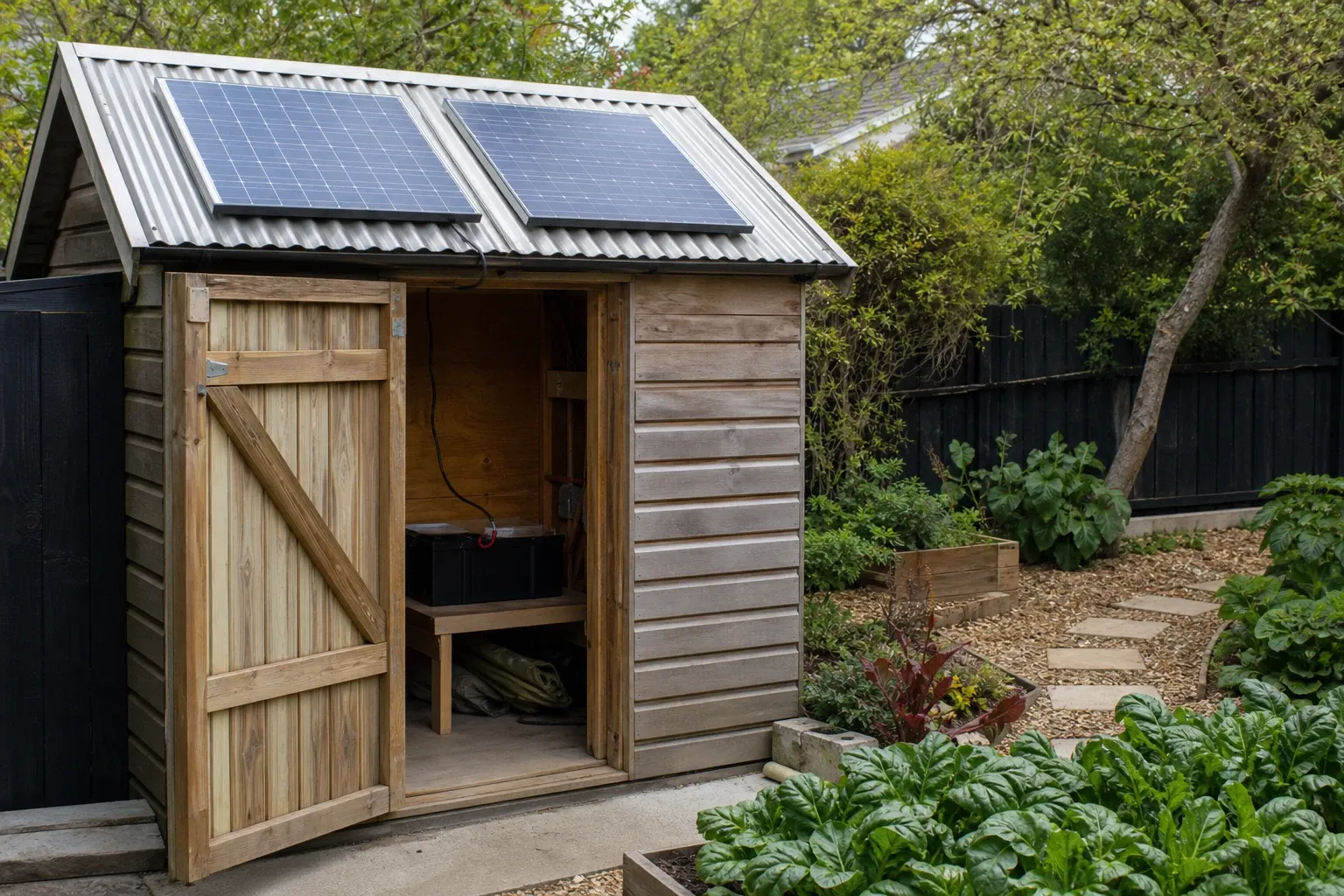
Quick verdict
The right setup depends on what you want from it. For any finished unit, check its drinking-water treatment, its solar needs and its written warranty before you buy.
- Want a finished machine you can drink from? Pick a unit that is made to produce drinking water, check that its treatment handles the contaminants that matter, and follow the maker’s instructions and filter schedule.
- Already own panels or plan a separate kit? A ready-made unit plus a sized panel and battery kit gives you the most control.
- Want to learn by building? A dehumidifier-based build using the Water Freedom System guide is the hands-on option. It’s a build-it-yourself guide, not a machine.
- Sizing rule of thumb: plan panels from your unit’s watts, run hours and local sun hours, and check your humidity first.
If you’re curious about building your own, see what the guide covers. Its refund window is 60 days from the purchase date in your ClickBank confirmation email. To ask, email richard@waterfreedomsystem.com with your full name and order number and the subject “Refund Request”. Digital access may be removed after a refund, and shipping and handling aren’t refundable.
See the Water Freedom System guide on the official site60-day money-back guarantee
Which solar-powered atmospheric water generator setup suits which reader?
The right solar setup depends on up-front cost, watts drawn, likely output, upkeep and what treatment comes included. Here’s how the main options compare.
| Option | What you get | What it needs | Up-front cost |
|---|---|---|---|
| Water Freedom System (build guide) | Digital guide (PDF and videos) with 4 bonus books | A dehumidifier and parts bought separately, electricity, humid air | $39.69 for the digital guide, paid once; parts bought separately |
| Ready-made solar-ready unit | Finished machine; treatment depends on the model | Panels, stored energy or daytime running, humid air, upkeep per the maker | Varies by model |
| Ready-made unit plus panel kit | Finished machine and a separate solar kit you size | Space for panels, a correctly sized inverter | Unit plus kit; varies widely |
Ready-made solar-ready unit
A ready-made unit is the simpler route if you don’t want to build anything. Being solar-ready doesn’t make its water safe to drink or its upkeep light, so check those separately.
- Pros: no building, and you don’t wire the cooling system yourself
- Cons: you still need a big enough array; check which cooling, collection and treatment parts the model includes, its installation needs and its written warranty
- Skip it if: its measured output at your temperature and humidity won’t meet your daily need
Compare complete installed prices for every option you’re considering.
Ready-made unit plus separate panel kit
Pairing a grid-style unit with your own panel kit suits readers who already have solar or want to grow it later. You pick the inverter and battery size to match.
- Pros: flexible, and the panels can power other things on cloudy water-light days
- Cons: more planning, and an undersized inverter can trip on compressor start
- Skip it if: you don’t want to size components yourself
Build-it-yourself dehumidifier-based unit
The Water Freedom System guide shows you how to build a home water-from-air unit around a dehumidifier. It’s a build guide rather than a finished machine, and the total build cost and water output aren’t established.
- Pros: you learn how every part works, the guide is a one-time $39.69 payment, and there’s a 60-day refund window from the purchase date in your ClickBank email (request it at richard@waterfreedomsystem.com with your full name, order number and subject “Refund Request”; access may be removed, and shipping and handling aren’t refundable)
- Cons: parts are bought separately, it needs electricity, and the collected water isn’t drinking water as collected
- Skip it if: you want a finished drinking-water machine
See the build steps and parts list on the official site.
See the Water Freedom System guide on the official site60-day money-back guarantee
How does an atmospheric water generator work, and is it real?
An atmospheric water generator is real: it pulls water vapor out of air through condensation, the same way a cold drink sweats on a summer porch. How much it makes depends on the air.
Condensation and dew point
The dew point is the temperature at which air becomes saturated and starts to drop its water. A compressor unit chills a coil, called a heat exchanger, below the dew point, and droplets form and drip into a tank.
Relative humidity is how full the air is with moisture compared with the most it could hold at that temperature. Condensation only happens on a surface colder than the air’s dew point, so judge any unit by its performance data at your actual temperature and humidity.
Refrigeration designs
Refrigeration designs use a compressor, like a fridge or dehumidifier. Check any design’s measured output and energy use rather than relying on its type alone.
Quick tip: Check your local temperature and humidity in a weather app over a week, then compare them with the unit’s measured output and energy-use data.
How much energy does an atmospheric water generator use?
Energy use per liter depends on the model and the air, so ask the seller for energy-per-liter figures measured at conditions like yours. A kWh is 1,000 watts running for one hour.
kWh per liter by humidity
Compare measured energy per liter at different humidity levels for the particular unit. As simple arithmetic, a unit that needs 0.5 kWh per liter and makes 10 liters (about 2.6 gallons) a day uses about 5 kWh. Real dry-weather energy use needs model-specific data.
Typical wattage of common units
Check your unit’s rated and measured running watts before you size anything.
Compressors also pull a short burst of extra power when they start, called surge. Check the compressor’s startup requirement and the inverter’s surge rating. A unit may need an inverter rated well above its running watts.
What solar panels and batteries does it take? A worked example
To size solar for an atmospheric water generator, multiply the unit’s watts by its daily run hours, divide by your peak sun hours, and add an allowance for system losses. The math below is an illustration, not a tested system design; work out real losses from your chosen equipment and site.
Step-by-step sizing
The sizing math is the same for any unit:
- Daily energy: watts × run hours. A 500 W unit run 8 hours uses 4,000 Wh, or 4 kWh.
- Panel watts: daily Wh ÷ peak sun hours × a loss allowance. With 4 sun hours and a 1.25 example factor: 4,000 ÷ 4 × 1.25 = 1,250 W of panels.
- Storage: decide whether you need it for night running, cloudy spells or startup demand, using your equipment’s specs. For night running, start with watts × night hours, then divide by the usable capacity your battery maker states, and allow for conversion losses, extra loads and startup needs.
Peak sun hours means the hours of full-strength sun your location averages. Look up your location’s figure for each season.
Sizing table: idealized arithmetic only
This table is plain arithmetic, not recommended equipment sizes. It assumes 8 run hours a day, 4 peak sun hours, a 1.25 loss factor, and 4 of those hours at night. The two battery columns show example usable fractions only; use your own battery maker’s limits, and check losses and startup capability for the real system.
| Unit draw | Daily energy | Panels (arithmetic) | Battery if half is usable | Battery if 80% is usable |
|---|---|---|---|---|
| 300 W | 2.4 kWh | 750 W | 2.4 kWh | 1.5 kWh |
| 500 W | 4.0 kWh | 1,250 W | 4.0 kWh | 2.5 kWh |
| 800 W | 6.4 kWh | 2,000 W | 6.4 kWh | 4.0 kWh |
| 1,200 W | 9.6 kWh | 3,000 W | 9.6 kWh | 6.0 kWh |
These numbers ignore humidity. Check the model’s output and energy data to see whether your target output is reachable in dry conditions.
Charge controller and inverter choices
Choose a charge controller that the panel, battery and controller makers list as compatible. Match its amp and voltage limits to your panels and battery bank.
Pick an inverter that meets the water unit’s and the inverter maker’s requirements for continuous power and compressor start. A portable power station must meet the unit’s continuous power, startup and runtime needs. Anything wired into a home panel is a job for a licensed electrician.
Daytime-only versus battery-backed running
Compare full costs for daytime-only and battery-backed designs rather than assuming the schedule alone sets the price. Before adding storage for night running, compare your night temperature and humidity with the unit’s performance data. If you use a timer, size the system and any battery for the real startup load, run hours and usable capacity.
What does solar-powered atmospheric water cost in total?
The total cost of solar atmospheric water is the unit or parts, plus panels, any battery, inverter and controller, plus upkeep over time. Compare whole costs, never a sticker price alone.
Upfront: unit, panels, battery, inverter
Up-front cost comes from four pieces:
- The water maker: a finished unit (price varies by model) or a DIY build. For the Water Freedom System route, the guide is $39.69 paid once, and the parts are bought separately.
- Panels: from the sizing math above, using current local quotes.
- Battery storage: set by your complete design; compare quoted prices, usable capacity and warranted cycle life.
- Inverter and controller: sized for surge and array voltage.
Running: maintenance and power
Running costs don’t vanish with solar. Budget for the upkeep and replacement items listed for your actual unit and power system. If you plug into the grid instead, multiply daily kWh by your electric rate.
Price per gallon over five years
Price per gallon is the fairest way to compare options. Add up up-front cost plus five years of running costs, then divide by the gallons you realistically expect over five years in your humidity.
For example, a setup that makes 2 gallons on an average day makes about 3,650 gallons over five years. Work through the same sums with your own numbers, and compare against local stored water and rainwater collection, including treatment and upkeep.
Can a dehumidifier make drinking water, and how does the Water Freedom System approach it?
Water from a dehumidifier or home build is not drinking water as collected. Keep it for non-drinking uses like plants, cleaning and flushing, unless every part the water touches is drinking-water safe, the treatment fits the contaminants actually present (for example, a filter certified to NSF/ANSI 53 for lead) and a certified lab test confirms it. Even for those uses, think about what’s in it before you reuse it.
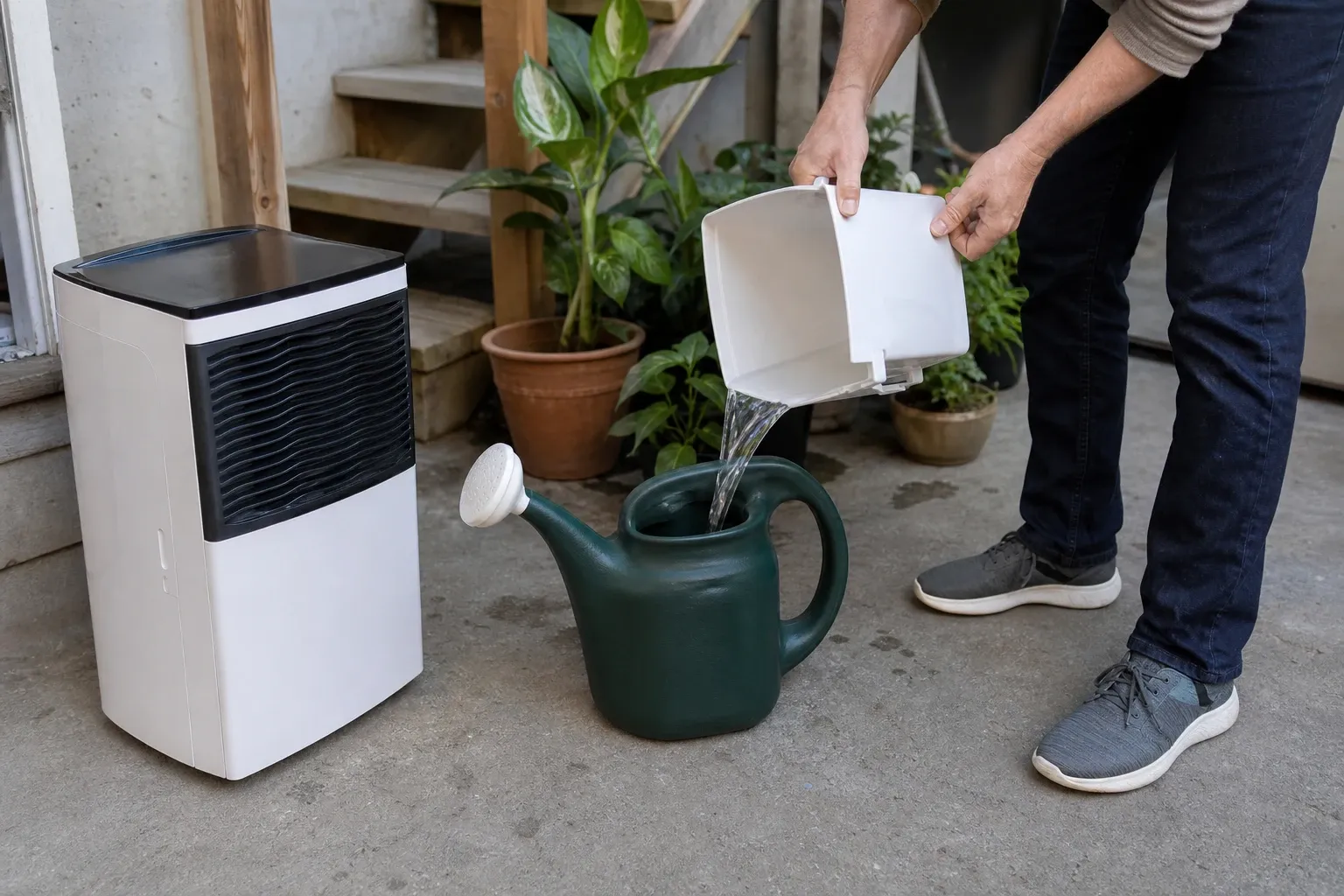
Coils, solder, drip pans and non-food-grade plastic can add metals or chemicals. Boiling, bleach and household filters kill germs or catch particles, but they don’t remove those metals or chemicals.
What the guide covers
The Water Freedom System is a step-by-step guide for building a home dehumidifier-based atmospheric water generator. The digital product includes a PDF and videos plus four bonus books on emergency drinking water, filtration and purification, water management and storage.
The maker says the main guide runs 114 pages, the printable version with photos runs 188 pages, and companion files include a parts and tools checklist, a manual on minerals and an off-grid guide covering home power options. A printed book plus digital version is also $39.69, with $9.95 shipping (US only), and shipping isn’t refundable. Its sales presentation claims “up to 60 gallons a day” from a home build, and says it can lower utility bills. No independent output tests for these builds have been published that we could find.
Main limits
The Water Freedom System suits a hands-on learner, not someone who wants a finished drinking-water machine:
- It’s a guide, not a machine: you buy the dehumidifier and parts separately.
- The build needs electricity, whether grid or solar.
- The build’s output at any given temperature and humidity hasn’t been shown.
- The water is for non-drinking uses unless it meets the conditions above.
The 60-day guarantee runs from the purchase date shown in your ClickBank confirmation email. To ask, email richard@waterfreedomsystem.com with your full name and order number, subject line “Refund Request”. Digital access may be removed after a refund, and shipping costs aren’t returned.
If building one fits your goals, the official site lays out the guide’s contents and refund terms.
See the Water Freedom System guide on the official site60-day money-back guarantee
Is solar still or portable purifier water safe to drink?
Water from a solar still or portable purifier is only as safe as its materials and its match to the hazards in your water. Neither one makes every source drinkable by default.
Solar still: building one and its limits
Use a documented solar-still design with materials rated for water contact at the temperatures it reaches. Sunlight evaporates water and leaves many salts and germs behind.
The limits are real. Output varies with the design and conditions. Some chemicals evaporate along with the water, so use materials rated for drinking-water contact at the still’s working temperature.
Do portable water purifiers work?
Portable purifiers work against the specific hazards they’re certified for, and nothing more. Look for a stated NSF/ANSI certification and check which contaminants it lists.
A filter certified for bacteria and cysts may not touch viruses, lead or chemicals. Read the box, then test your water to know what you’re dealing with.
Treating and testing collected water
Water from a finished drinking-water unit should be handled exactly as the maker’s instructions say, including the filter schedule. For collected or DIY water, have a certified lab identify what’s in it first; no single filter-and-boil routine fits every case.
Keep up with maintenance:
- Follow the maker’s coil-cleaning instructions, including switching off power.
- Look after any air filter as the unit’s instructions say.
- Sanitize the tank and lines regularly.
For questions about what to test for, ask your local health department or a certified lab.
Pros, cons and who should skip solar atmospheric water
Keep stored emergency water no matter what; how much an atmospheric unit will make where you live depends on the model and your air. Here’s the honest balance.
Pros
- Adds a water source you can run off-grid
- Adjustable: run more on sunny, humid days
- Panels can power other loads when you don’t need water
Cons
- Energy per liter varies, so you need measured figures for your conditions
- Output depends on local temperature and humidity
- Panels, storage and related gear add up; get current quotes
- Ongoing upkeep and testing
Who should skip it
- Anyone whose unit can’t meet their needs at their local temperature and humidity
- Households where rainwater collection or stored water meets the need more cheaply
- Readers who don’t want to handle treatment and testing
A few sealed containers of stored water and a plan for treating it are a solid base for any home.
Where solar fits in the bigger water-from-air picture
Solar is one power choice for an atmospheric water generator, alongside grid power and small generators. For how these machines work and the full range of types, start with our guide to how atmospheric water generators work and your options.
If you’re leaning toward a finished machine, compare models in our roundup of the best home units. If you plan to run fully away from the grid, our page on off-grid water-from-air setups covers fuel, storage and backup planning.
Your next step
Before you price any unit or panel, check your local temperature and humidity for a few weeks. Then run your target unit’s watts and hours through the sizing steps.
If you’d rather build than buy, our DIY solar water-from-air planning guide walks through matching a homemade unit to a small array. Whatever route you pick, keep home-build water for non-drinking uses unless it meets the conditions above.
Questions people ask
What size solar generator can run an atmospheric water generator?
A portable power station needs continuous output above the unit’s running watts and a surge rating that covers the compressor’s startup. At a steady 300 W, 1.5 kWh works out to five hours before losses and capacity limits, so check the station’s real AC runtime and startup support against the unit’s specs.
Does an atmospheric water generator work at night on solar?
A unit powered only by solar needs stored energy to run at night; another power supply changes that. Start with the unit’s watts times night run hours, then allow for usable battery capacity, conversion losses, extra loads and startup needs. Judge night running by night temperature, humidity and the unit’s measured performance.
Can I run a dehumidifier on solar panels?
Yes, if the system is sized for it. Size the array, controller, inverter and any storage against the dehumidifier’s startup load, daily energy use and your local sun. The collected water isn’t drinking water; keep it for non-drinking uses after thinking about what’s in it, unless every wetted part is drinking-water safe, treatment fits the contaminants present and a certified lab test confirms it.