Some links on this page are affiliate links: we may earn a commission if you buy, and your price doesn't change. Details
Alongside stored water and a plan for treating it, some households add a home-built water-from-air unit as an extra source.
See the Water Freedom System guide on the official site60-day money-back guarantee
What is an atmospheric water generator and how does it work in plain words?
An atmospheric water generator (AWG) is a machine that pulls moisture out of the air and collects it as liquid water. Think of a dehumidifier built to save the water instead of dumping it.
The short version
An AWG moves air past something that grabs vapor, then collects the liquid. Home use is the most common setting, with small office units and off-grid setups working the same way. Commercial use means larger machines that make more water per day. Emergency water is a backup role, not the main job for most people.
Parts you will find in most units
- Fan and air filter to pull in air and keep dust out
- Cooling coil or desiccant to capture the vapor
- Collection tray and water tank
- Water filters and a pump
Example: a countertop unit pulls room air through a filter, over a cold coil, and into a tank you pour from. For a wider tour of machines, see our guide to water from air generators and the atmospheric water generator hub.
How does the condensation method turn air into water, step by step?
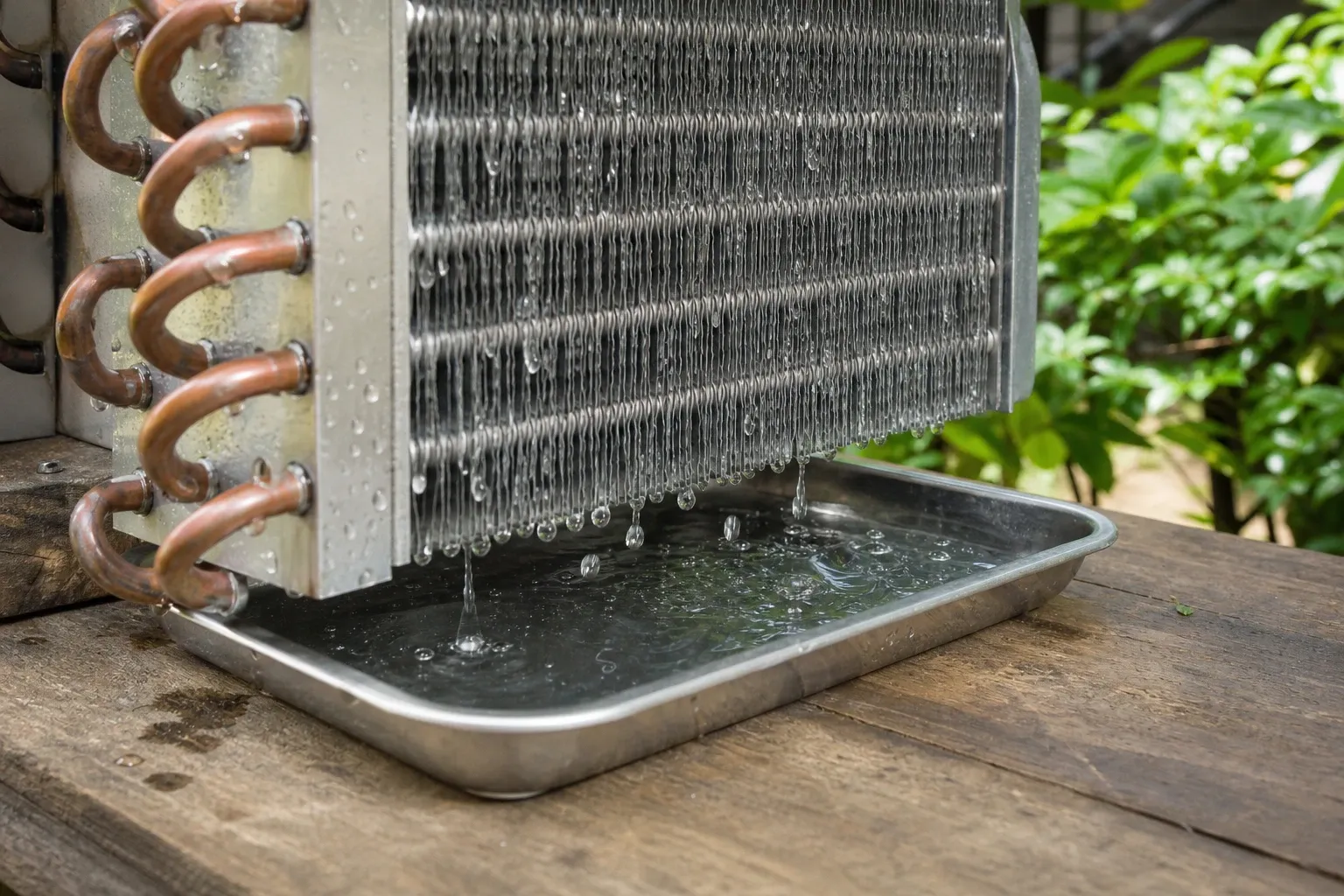
The condensation method cools air until it hits its dew point, the temperature where air can’t hold its vapor any longer. The vapor then turns into droplets, like a cold glass sweating on a summer day.
Step 1: Fan draws in warm, humid air
The fan pulls room or outdoor air through a dust filter. Warm air holds more vapor than cool air, so warm and humid is the best starting point.
Step 2: Air meets a cold coil and reaches the dew point
A refrigerant system (compressor, evaporator and condenser) chills the coil. When air touches it and cools past the dew point, vapor drops out as liquid.
Step 3: Droplets form and drip into a tank
Droplets run down the coil into a tray, then into the water tank. This is the same physics a dehumidifier uses.
Step 4: Filtering and optional UV and mineralization
Finished drinking units usually run water through a carbon filter and UV light, then may add minerals back (mineralization) for taste. Follow the maker’s instructions for these parts.
Day or night? Sunlight isn’t needed. Output follows humidity and temperature, and nights are often cooler and more humid, though cooler air holds less vapor, so a mild humid night often beats a hot dry noon.
How does a desiccant atmospheric water generator work?
A desiccant AWG uses a drying material that absorbs vapor, then heat drives the water back out so it can be condensed. Silica gel and zeolite are two common desiccants.
Silica gel and zeolite explained
Silica gel is the same material in those little packets in shoe boxes. Zeolite is a porous mineral that holds water tightly. Both soak up vapor, then release it when heated, including with solar heat.
When desiccant beats condensation
Desiccants handle drier and cooler air better than a cold coil. The trade-off is that they need heat energy. MIT engineers tested a passive hydrogel harvester in Death Valley that made up to 160 milliliters (about two-thirds of a cup) a day without power. That’s a small amount, but it shows the idea works in dry air.
| Feature | Condensation | Desiccant |
|---|---|---|
| Core step | Chill air to dew point | Absorb vapor, then heat to release |
| Best air | Warm and humid | Drier or cooler |
| Energy | Electricity for compressor | Heat, sometimes solar |
| Night and day | Either, by humidity | Often absorbs at night, releases by day |
| Home availability | Common | Less common |
For a closer look at the machine versus a household appliance, see atmospheric water generator vs dehumidifier.
How much water can it make where I live? Humidity, temperature and electricity
Daily output depends mostly on humidity and temperature, and real-world output is usually well below a unit’s lab rating. Check the rating conditions in the maker’s specs.
Output by humidity and temperature
Condensation units tend to struggle below roughly 30 percent relative humidity. Cool air lowers output too. The chart shows the trend, not a promised amount.
Example: a humid Gulf Coast summer suits a coil unit. A dry Nevada winter doesn’t.
Energy consumption per liter
The compressor and fan draw electricity, so energy consumption sets your cost per liter. Makers publish watts and liters per day for their own units, so divide your cost per kilowatt-hour by the liters per kilowatt-hour you work out from those specs. Solar panels can offset some of the draw.
Is atmospheric water safe to drink?
Condensed water isn’t automatically drinkable, because air carries dust and microbes and coils can add residue. Safety depends on the unit’s parts and how you care for it.
What filtration and UV do
Carbon filters catch some chemicals and improve taste. UV light targets germs. NSF/ANSI 61 covers materials that touch drinking water, so it helps you judge parts but doesn’t prove the finished water is purified. Boiling, bleach and ordinary filters deal with germs or particles. They don’t remove metals or chemicals from roofing, coils, solder, fuel or non-food-grade containers. Water from a DIY or dehumidifier build isn’t drinking water as collected. Use it for plants and cleaning. If it may be chemically contaminated, use another safe supply and follow your local health department’s guidance. For a long-term drinking setup, choose treatment certified for the specific contaminants you are worried about, and have the water tested by a certified lab. Repeat the test over time, because one result isn’t ongoing proof.
Care and filter replacement
Clean coils, change filters on the maker’s schedule and keep the tank sealed.
Quick tip: write the filter date on the tank with a marker.
Which type of generator suits a home, and where does a DIY dehumidifier build fit?
Ready-made units suit most homes because they include filtration, while a DIY dehumidifier build suits hands-on people in humid regions. Larger makers such as Watergen serve bigger commercial needs.
Ready-made units versus a DIY build
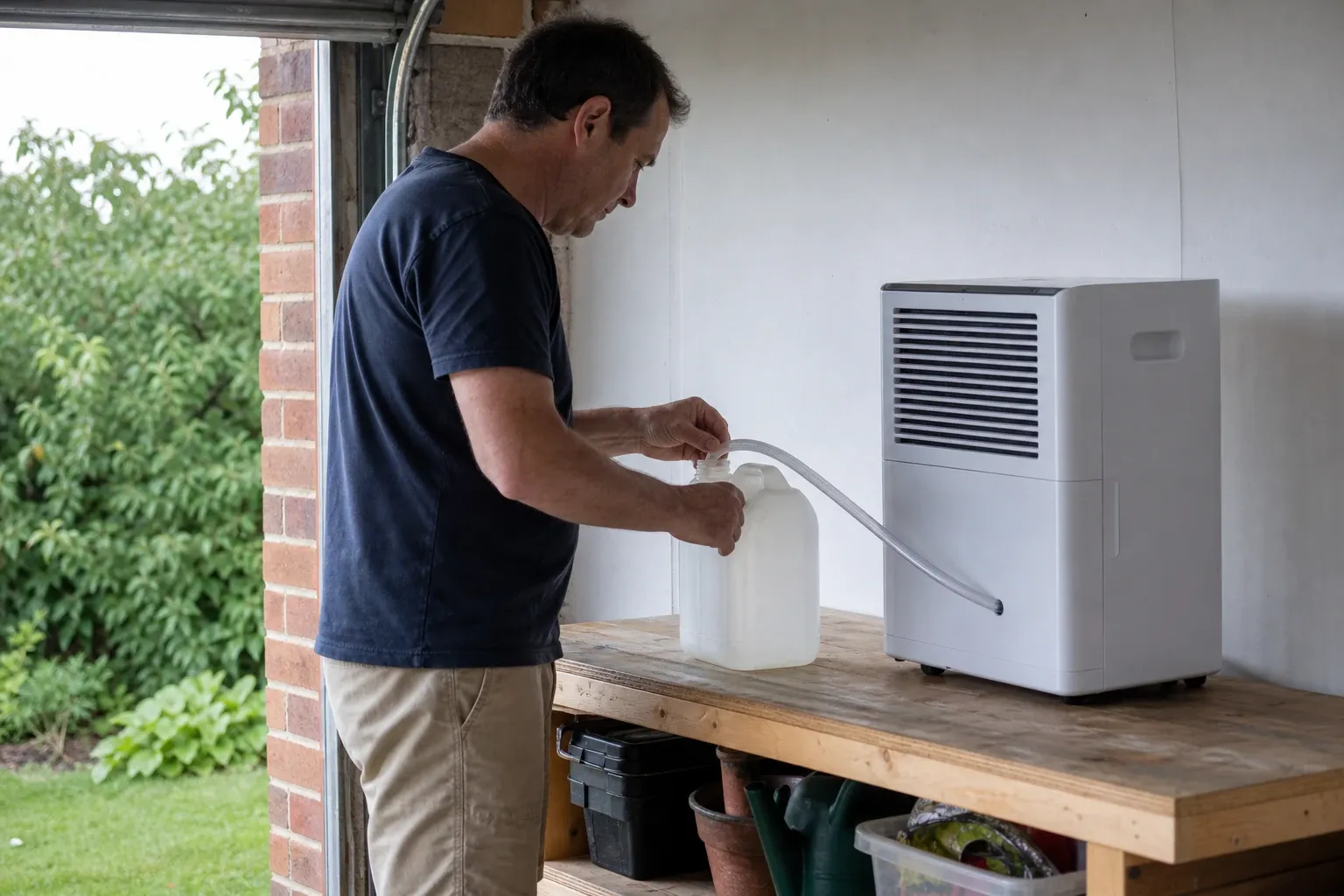
Ready-made units cost more but come with filters and a warranty. Some people also like that a unit cuts down on plastic bottle purchases. DIY guides exist for building your own dehumidifier-based unit, and we cover one in our Water Freedom System review.
Who it suits and who should skip it
An AWG suits humid regions, off-grid use and backup water. Skip it in dry or cool climates or if your water is cheap and reliable. For plain dehumidifier water, read dehumidifier water collection.
Where does this page fit in the bigger picture?
This page explains the mechanics behind every machine covered in the atmospheric water generator hub. Once you know how condensation and desiccant cycles work, you can judge claims about output and cost more easily. For machine types, read water from air generators. To compare with an appliance you may already own, see atmospheric water generator vs dehumidifier.
Questions people ask
Can an atmospheric water generator run on solar power?
Yes, many can. A condensation unit needs steady electricity, so it needs enough panels, and often a battery, to cover its watts. Desiccant designs can use solar heat directly. Check the unit’s wattage first, then size the panels to match.
Do these machines work in dry climates?
Condensation units lose output as air dries, and many struggle below roughly 30 percent humidity. Desiccant designs cope better but need heat. In a desert, expect small amounts. MIT’s passive test in Death Valley reached about 160 milliliters a day.
How noisy is an atmospheric water generator?
Condensation units have a compressor and fan, so they sound like a dehumidifier or small fridge. Noise levels vary by model, and makers don’t always publish decibel figures. Check the spec sheet, and place the unit away from bedrooms.