Some links on this page are affiliate links: we may earn a commission if you buy, and your price doesn't change. Details
Alongside stored water and a plan for treating it, some households add a home-built water-from-air unit as an extra source.
See the Water Freedom System guide on the official site60-day money-back guarantee
How much emergency water does my household need?
A household needs at least 1 gallon of water per person per day for drinking and basic hygiene, and the CDC says to store enough for 3 days, or 2 weeks if possible. Plan on more if you also want water for cooking, washing up or bathing.
The daily per-person rule
The daily rule is at least 1 gallon (about 3.8 litres) per person, which covers drinking and basic hygiene and not much more. Hot weather, illness, pregnancy and nursing all raise that number, so round up when you can.
Split your plan in two. Drinking water comes first. Cooking, handwashing and basic cleaning sit on top of it. Pets need water too, so add them to the total.
A worked example for a family of four
A family of two adults and two kids needs 12 gallons for 3 days at the drinking minimum, and 56 gallons for 14 days.
| Plan | Per person per day | 3 days (4 people) | 14 days (4 people) |
|---|---|---|---|
| Minimum (drinking and basic hygiene) | 1 gallon | 12 gallons | 56 gallons |
| Drinking, cooking, hygiene | 2 gallons | 24 gallons | 112 gallons |
A medium dog might need about a gallon a day in hot weather, so add that on top if you have one. This family could meet the 3-day drinking goal with two 5-gallon containers plus a few extra jugs.
How long will 500 gallons last one person?
How long 500 gallons lasts depends on how much each person uses. The math is simple: divide 500 by the gallons used each day, and treat the result as an upper limit, not a promise.
For a household of four, 500 gallons lasts about 125 days at 1 gallon each, or about 62 days at 2 gallons each.
Those numbers are theoretical. Stored water still needs fresh refills, and home-filled water is usually refreshed about every 6 months. A 500-gallon supply only works if you can rotate it, so most homes do better with a smaller amount they can actually manage.
Think of it as milk in a fridge: having a lot doesn’t help if you can’t keep it fresh.
This suits people with a big tank and a plan for turnover. If you don’t have space or a way to cycle the water, aim for the 2-week goal first. A bigger setup is covered on our emergency water storage tank page.
What is the best container for storing emergency water?
The best container is a clean, food-grade, lidded one with a tight seal, made of sturdy plastic such as HDPE 2, kept out of light and heat.
Look for these traits:
- Marked food-grade, or made for drinking water
- Tight lid or cap
- Opaque or UV-resistant (it resists sun damage and blocks light that helps algae grow)
- Never held non-food products
- No metal unless it’s stainless steel
The table compares common choices. Costs are rough ranges and vary by store and brand.
| Container | Typical size | Portability | Rough cost | Best use |
|---|---|---|---|---|
| Commercial bottled water | 16 oz to 5 gal | Easy | Low per bottle, adds up | Grab-and-go, printed date |
| HDPE 2 jugs | 1 to 2.5 gal | Easy | Low | Starter supply |
| Stackable 5-gallon | 5 gal (about 40 lb) | Fair | Moderate | Main home storage |
| Collapsible | 2 to 7 gal | Easy to store empty | Low to moderate | Backup, fill when needed |
| Jerry can | 5 gal | Good | Moderate | Car, garage, camp |
| 55-gallon drum | 55 gal | None once full | Moderate to high | Long-term home supply |
| 100-gallon bladder | 100 gal | Fixed | Moderate | Bathtub fill |
| Glass jars | Quart to gallon | Poor | Low | Small amounts, sturdy shelf |
Food-grade plastic: HDPE 2 and BPA-free jugs
HDPE 2 plastic is the usual choice because it’s tough and made for food. Look for the recycling number 2 and a BPA free label if that matters to you.
Avoid reusing milk jugs. They’re thin, hard to clean, and tend to break down. Soda bottles (PET) are a better reuse choice, if washed well.
5-gallon stackable containers and collapsible containers
A 5-gallon stackable container holds 40 pounds of water and fits in a closet or under a shelf. It suits most homes best.
Collapsible containers fold flat until needed. Skip them as your only supply, since they only hold water once you’ve filled them. Our emergency water storage container guide compares more models.
55-gallon drums and 100-gallon tanks like the Water Bob
A 55-gallon drum holds about 450 pounds of water, so set it where it will stay. The 100-gallon Water Bob is a bladder that lines a bathtub, and you fill it before a storm. It’s meant for short-term use, not months on a shelf. See the bathtub emergency water storage guide for the details.
Jerry cans: how long can water sit in one?
Water in a clean, sealed, food-safe jerry can that stays dark and cool is treated like any home-filled water: refresh it about every 6 months. Use cans made for water, not fuel.
Glass jars: how long does water stay good, and glass versus plastic
Water in a clean, sealed glass jar keeps about as long as water in plastic, so refresh it about every 6 months. Glass doesn’t leach anything into water. It’s heavy and breaks, so keep jars low on sturdy shelves and use them for small amounts.
How do I clean, fill and treat tap water for storage?
To store tap water, wash the container, sanitize it with a diluted bleach solution, rinse it, then fill it from a clean tap and seal it.
Clean and sanitize the container
Wash with dish soap and rinse. Then sanitize with a mix of 1 teaspoon of unscented household bleach in 1 quart of water. Swish it on every surface, wait a couple of minutes, and rinse with clean water. Keep your hands, hoses and spouts clean while you work.
Fill with municipal tap water
City tap water is already treated, so most people can fill containers straight from the tap and seal them. Leave the lid off the tap-side as little as possible, and don’t touch the inside of the cap.
When to add chlorine bleach and how much
Add bleach only if your water isn’t commercially treated. The EPA explains how to disinfect water with household bleach, including how much to use. Use plain, unscented bleach with no added cleaners, and follow the label.
If your water comes from a well
Test well water before storing it, using a certified lab or your health department. Fill containers once the test shows it’s safe. Don’t skip the test because the water looks clear.
Where should I keep stored water at home?
Keep stored water in a cool, dark place, away from sunlight and from gasoline, pesticides and solvents.
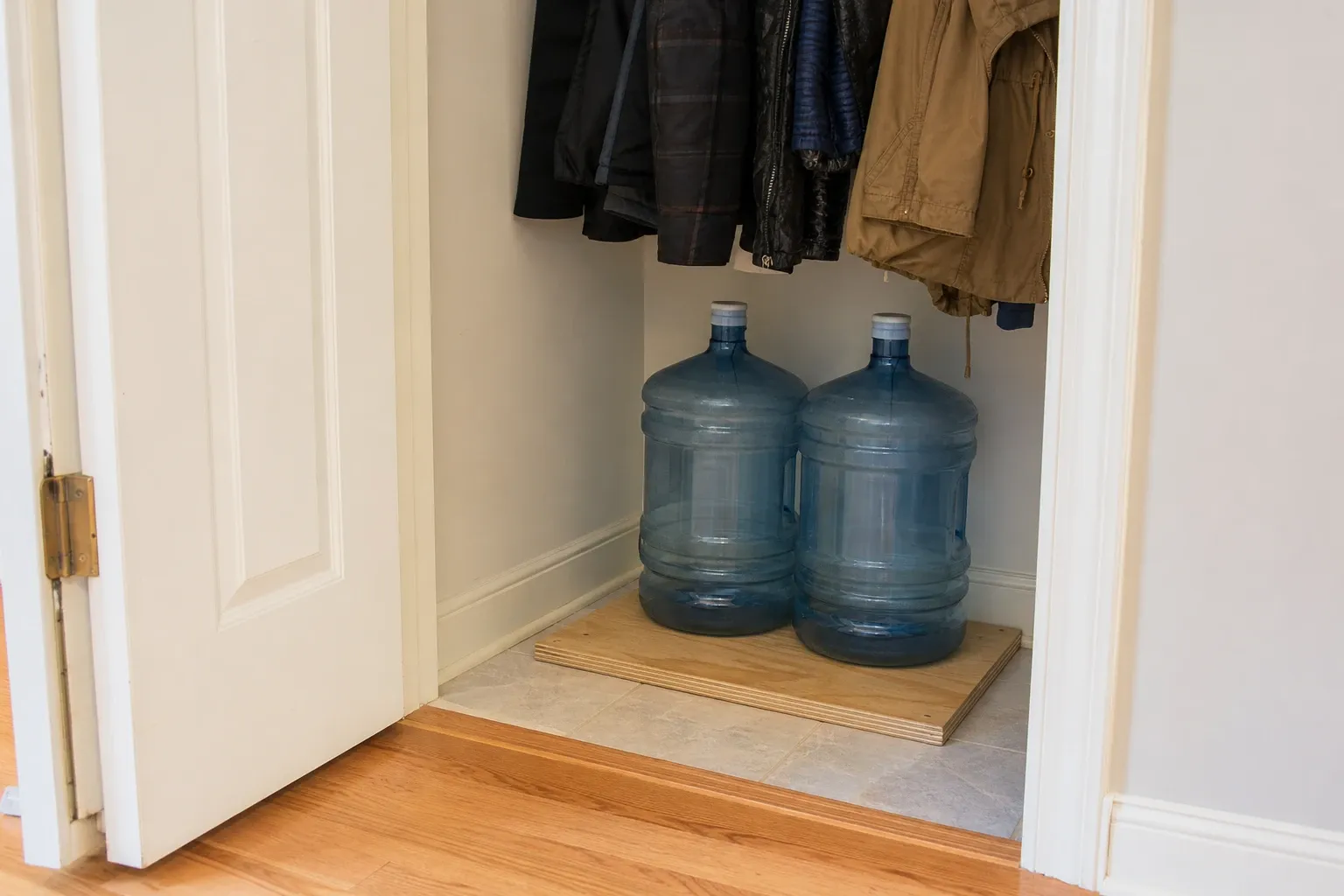
Good spots include closet floors, under beds, a basement and the pantry. Spread your supply over several rooms so one leak or one blocked door doesn’t cut you off.
A few practical points:
- Water weighs about 8 pounds a gallon, so check shelves and floors.
- Set thin containers on a board, not bare concrete.
- Keep water from freezing. Leave space in the container if cold is likely.
- Put containers in a tray or on a low spot where a leak won’t harm anything.
Example: a family of four could put two 5-gallon containers in a hall closet, two under beds, and a case of bottled water in the pantry.
How often should I rotate and label stored water?
Rotate home-filled water about every 6 months, and follow the printed date on commercially bottled water.
A simple label and calendar system
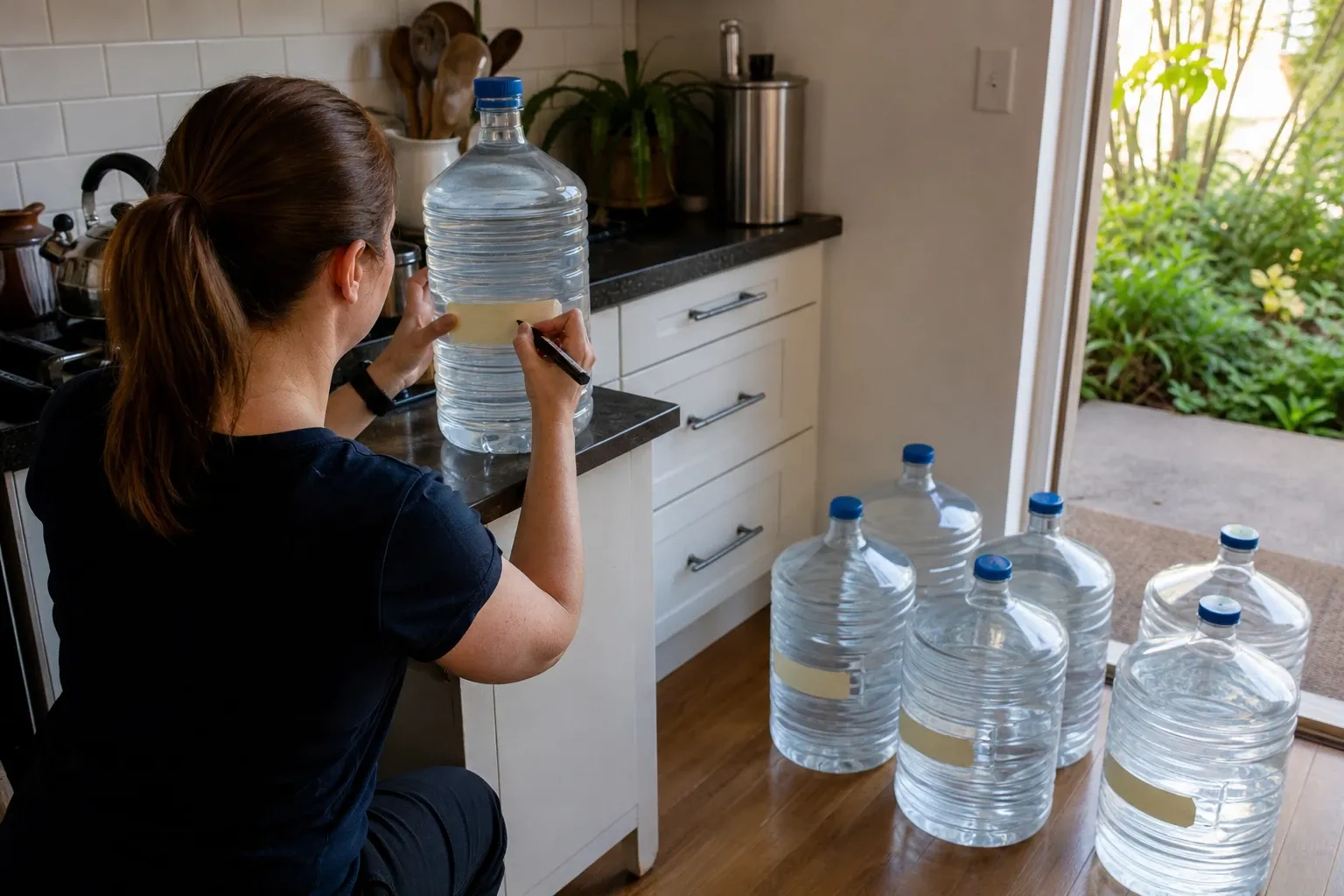
Write the fill date and the replace-by date on masking tape or directly on the lid. Add a note on your phone calendar. Tying the swap to the clocks changing each spring and fall is an easy rule to remember.
Rotation schedule by container type
| Container | Replace |
|---|---|
| Bottled water | Printed date |
| Home-filled jugs, jerry cans, drums | About 6 months |
| Glass jars | About 6 months |
When it’s time, use the old water on houseplants or for cleaning, then wash and refill. This cuts waste and keeps your system moving.
What if the power goes out or my stored water runs low?
If stored water runs low, use your home’s backup sources first, then treat any questionable water before drinking it.
Backup water sources in the home
A water heater tank and melted ice are fallback sources. Toilet tanks are not drinking water if you use cleaner tablets, so avoid them. Turn off power or gas to the heater before draining it.
Treating found water before drinking
Filter cloudy water through a clean cloth first, then boil or disinfect it. The CDC says to boil water for 1 minute, or 3 minutes above 6,500 feet. A water filter alone isn’t enough for viruses, so boil or disinfect after filtering.
Using stored water wisely for hygiene and sanitation
Stored water should go to drinking first, then cooking and handwashing. Use a small bowl for washing and don’t let the tap run. Save used water for flushing if the toilet allows it.
Emergency water storage checklist
This checklist walks you from counting people to scheduling the first swap.
Check off each step for every person and pet in your home. FEMA and the CDC both point to the same basics, and Ready.gov covers water for household preparedness if you want a second view.
Where does this fit with making water from air?
Stored water is the base of a home water plan, and an atmospheric water generator is one way to add to it.
A water-from-air unit makes more water over time, but it needs the right humidity and power. Anything it makes still needs treatment before drinking. Stored water is simpler and works the same in any climate. For a bigger tank setup, see emergency water storage tanks.
More guides in Emergency storage
Questions people ask
Is bottled water better than storing tap water?
Bottled water is convenient because it’s sealed and has a printed date. Tap water you store yourself works too if the container is clean and food-grade. Refresh home-filled water about every 6 months and label each container.
Can I store emergency water in old milk or juice jugs?
It’s better not to. Milk jugs are thin, break down and are hard to clean fully. Washed soda bottles or containers sold for water storage are a better choice. Always wash, sanitize, rinse and label whatever you use.
Should I store water in the freezer?
Yes, a freezer can hold a little extra water, and ice helps keep food cold in an outage. Leave room at the top of each container because water expands as it freezes. Melted ice still needs treating if it’s questionable.