Some links on this page are affiliate links: we may earn a commission if you buy, and your price doesn't change. Details
Alongside stored water and a plan for treating it, some households add a home-built water-from-air unit as an extra source.
See the Water Freedom System guide on the official site60-day money-back guarantee
What is the best filter for rainwater harvesting?
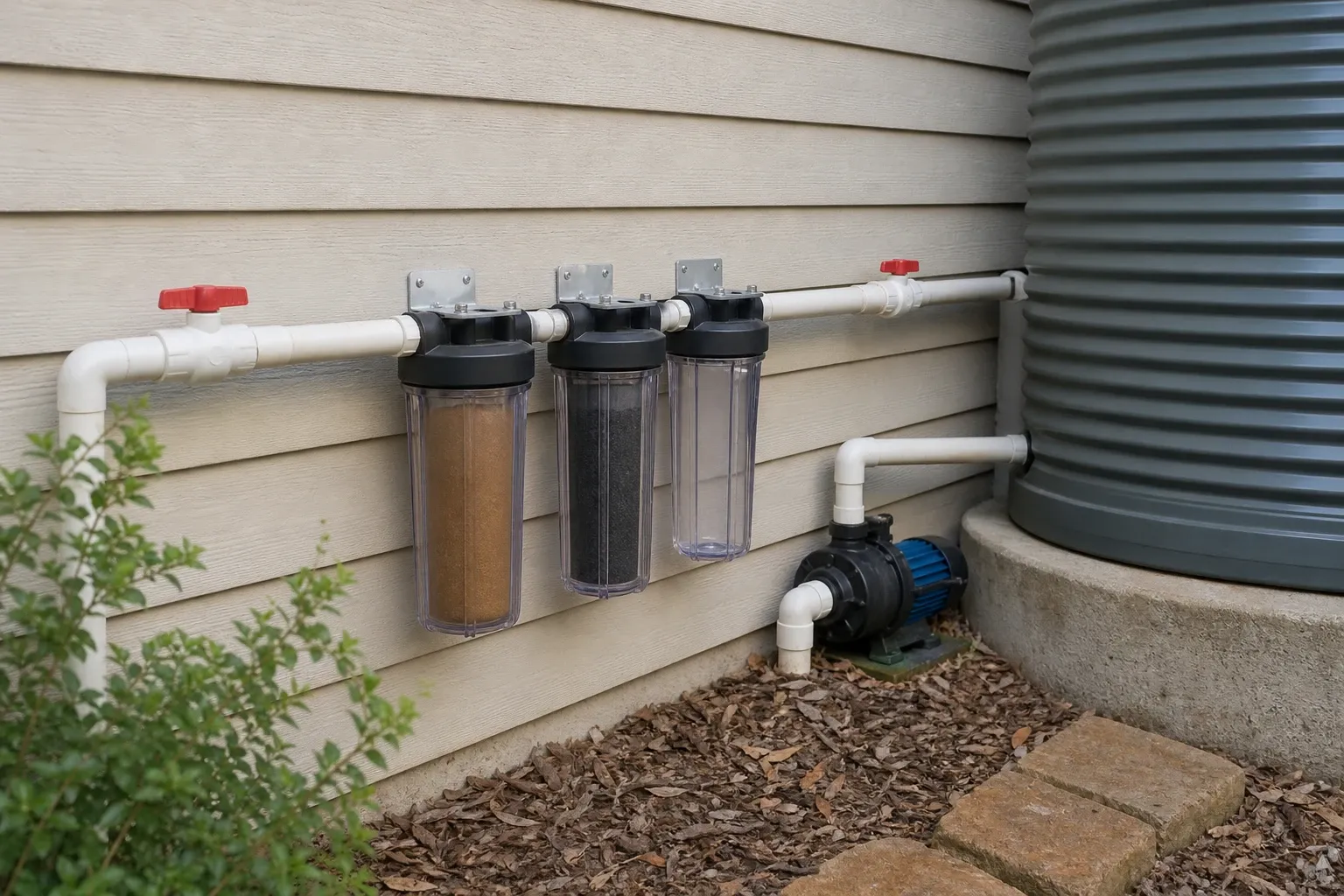
The best filter for rainwater is a chain of stages, not one cartridge. Each stage fixes a different problem, and the right chain depends on whether the water is for plants or for drinking.
Here is the order water usually travels:
- Gutter guard (keeps leaves out)
- First-flush diverter (throws away the dirty first rain)
- Tank inlet filter
- Storage tank and pump
- Sediment filter
- Carbon filter (optional, for taste and smell)
- UV or other disinfection
Think of it like washing a muddy dog: brush first, then rinse, then shampoo. Doing the fine step first just clogs it.
For the garden, stages 1 to 3 do most of the work. For drinking, you need a sediment stage, disinfection and a lab test. Carbon is added when taste or smell is a problem.
What does each filter stage remove, and what does it miss?
Each stage removes one kind of problem and misses the others, so the table below shows what to expect from each one. Rainfall carries different amounts of dust, pollen and droppings from roof to roof, so the first stages matter most after dry spells.
| Stage | What it does | Removes | Does not remove | Typical placement | Upkeep |
|---|---|---|---|---|---|
| Gutter guard and first-flush diverter | Blocks debris, dumps first rain | Leaves, dust, bird droppings | Dissolved chemicals, germs in water that gets through | Roof, gutters, downpipe | Clear after leaf fall or pollen |
| Sediment (5 micron) | Strains fine particles | Most grit, silt, rust flakes | Germs, taste, dissolved chemicals, some particles near or above its rating | After pump | Swap cartridge when flow drops |
| Carbon (optional) | Adsorbs (grabs onto) some chemicals, meaning they stick to its surface | Some odor, chlorine-type taste and organics | Germs, metals | After sediment | Swap per the maker’s rating |
| UV | Light that inactivates germs | Bacteria and viruses, when the water is clear and the lamp gets the right dose at the right flow | Chemicals, particles | Last stage | Lamp yearly |
First-flush diverter
A first-flush diverter sends the first bit of roof runoff away from the tank. That bit carries the most dust and droppings. The Department of Energy technology review lists it as the part that removes debris the inlet filter missed. It does nothing about germs in the water that follows.
Sediment filter (5 micron and finer)
A 5 micron sediment filter catches most particles around 5 microns and larger, about a fifteenth the width of a human hair. Some particles near that size can still slip through. It protects the carbon and UV stages. UV light can’t get through cloudy water, so this stage has to come first.
Carbon filter
A carbon filter improves taste and smell and cuts some organic chemicals. You don’t need it in every setup. It does not reliably kill bacteria. A wet carbon block that sits unused can grow them, so change it on schedule.
UV disinfection
UV disinfection inactivates bacteria and viruses, but only when the water is clear and the unit delivers its proper dose at your flow rate. It can’t remove metals, pesticides or grit. Follow the lamp maker’s flow rate and replacement guidance.
What filter do I need for a rainwater tank?
A rainwater tank needs coarse filtering before it and finer filtering after it. Pre-tank filters keep sludge from building up, and post-tank filters polish the water you actually use.
Before the tank: gutter guards, inlet filter, spindown or vortex filter
Gutter guards, an inlet filter and a spindown filter (a flushable sediment filter you rinse by hand) protect the tank. Fit a gutter guard on every run. A vortex filter sits in the downpipe and sheds leaves with the flow. Sizing and tank types are covered in our guide to rainwater tanks and cisterns.
Overflow, floating extractor and backflow prevention
An overflow skimmer lets surface scum leave the tank when it fills. A floating extractor draws water from just below the surface, above the bottom sludge. If the tank ever connects to household plumbing, backflow prevention stops tank water flowing back into the mains. Have a licensed plumber do that part.
After the tank: pump, sediment, carbon, disinfection
The pump comes first so the finer filters get steady pressure. After it go sediment, carbon if you want it, and disinfection, in that order. A typical garden setup stops at the pump and a sediment filter.
Can you collect rain water and filter it to drink?
You can treat collected rain for drinking, but filtering alone isn’t enough. You also need disinfection and a lab test. The Department of Energy review says rainwater can reach potable standards with added filtration and disinfection. Potable rainwater systems can need permits, operators or testing, depending on your state and local rules.
Garden and non-potable uses
Non-potable water (not for drinking) needs only screens, a first-flush diverter and a sediment filter. Watering plants, washing the car and flushing toilets all fit here. A drip line may need a finer filter to stop clogged emitters.
Drinking: the extra steps
Drinking water needs sediment filtering, disinfection and a test. Roof material matters. Skip roofs with treated wood shakes or metal-leaching coatings for drinking, and check local rules. If the water may be chemically contaminated, use another safe supply and follow your local health department’s guidance. For a long-term drinking setup, use treatment certified for the specific contaminants and have a certified lab test the water, repeating it over time, since one result is not ongoing proof.
For small amounts, a canister filter or ceramic filter is an option. Many are made for stream or tap water, so check the maker’s notes for rainwater and still disinfect. Boiling kills germs per the CDC boiling guidance, at 1 minute, or 3 minutes above 6,500 feet. Boiling, bleach and ordinary filters deal with germs or particles. They do not remove metals or chemicals from roofing, solder or containers that aren’t food grade. For more on treatment, see our off-grid water purification guide.
How much do rainwater filters cost and how often are they replaced?
Rainwater filters range from a few dollars for screens to a few hundred for UV units, and cartridges need regular swaps. Prices vary a lot, so check current listings.
| Stage | Rough cost tier | Replace or clean |
|---|---|---|
| Gutter guard | Low | Clean after leaf fall |
| First-flush diverter | Low to moderate | Empty and clean chamber |
| Sediment cartridge | Low | Every few months to a year, by load |
| Carbon cartridge | Low to moderate | Per maker rating |
| UV unit | Moderate to high | Lamp about yearly |
The tank itself is built to last. The Department of Energy review says makers often warrant tanks and pipework for 15 to 30 years and pumps for 2 to 10 years.
Spend first on pre-tank filtering. It protects every later stage.
Quick tip: Write the change date on each cartridge with a marker.
How do I install a basic home filter setup?
A basic setup runs from roof to tap in seven steps. This suits a plug-in pump and simple housings, not new electrical wiring.
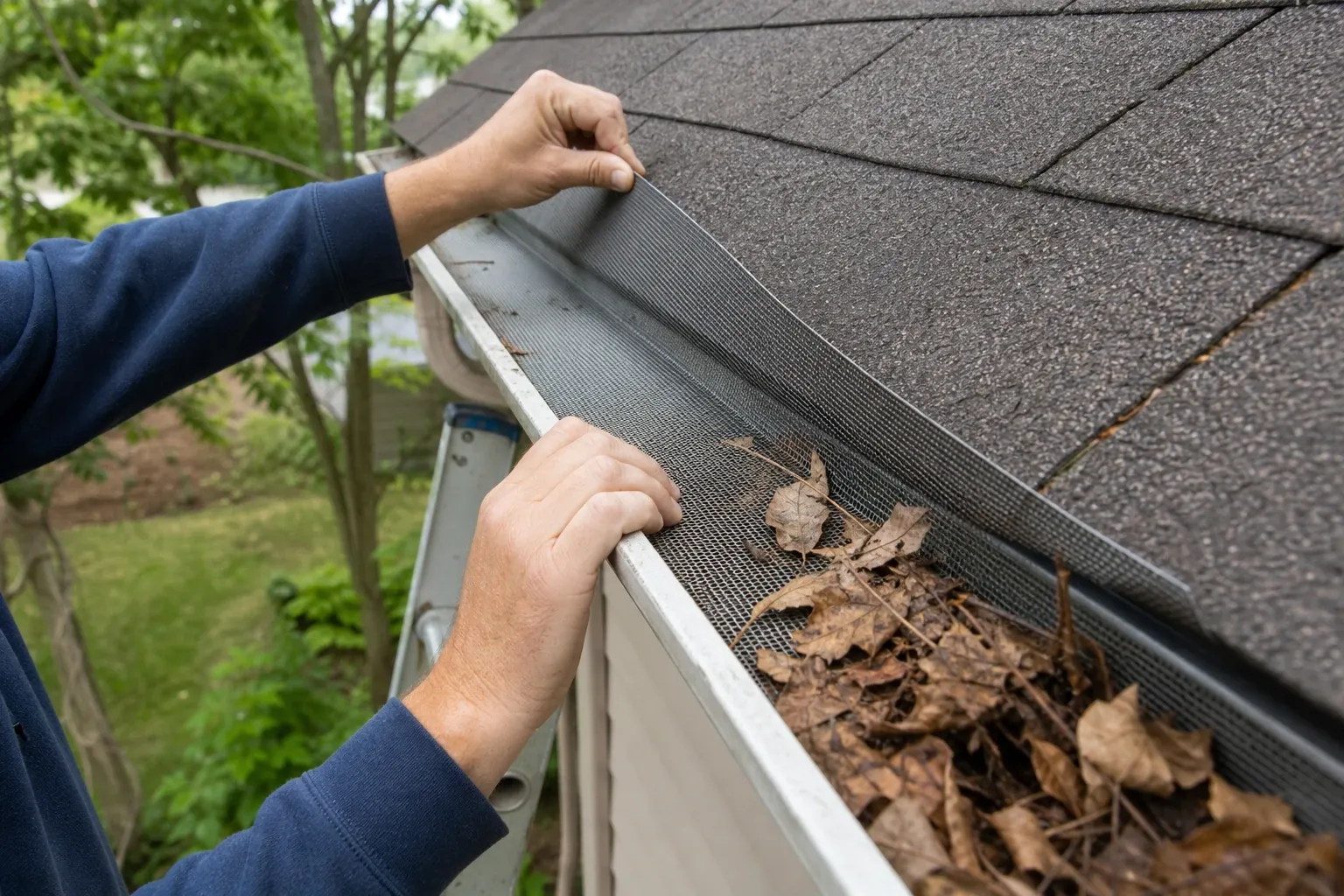
- Fit gutter guards along every run.
- Add a first-flush diverter on the downpipe.
- Put an inlet filter on the tank, plus an overflow skimmer.
- Install a floating extractor and a pump.
- Mount a sediment housing after the pump.
- Add a carbon housing next, if you want one.
- Finish with a UV unit, if you plan to drink the water.
Match housings to your pump’s flow and pressure. Slimline 10 or 20 inch housings are common. Fit shutoff valves on both sides of each housing, plus a bypass, so you can change cartridges without draining the line. Use a licensed electrician for any hardwired UV power. For a full build, see our DIY rainwater harvesting plan.
How do I know the filtered water is safe? Testing and local rules
You know rainwater is safe only after a certified lab tests it. Filters lower risk but don’t guarantee anything.
Send a sample for bacteria and basic chemistry before drinking. Retest on a schedule, and again if the roof, filters or tank change. Your health department can point you to a certified lab.
Rules differ by state and locality, and some limit potable use or need permits, operators or testing. The Department of Energy review says to comply with local testing rules. Until a test passes, use the water for plants and cleaning.
Where does filtering fit in a whole rainwater system?
Filtering is one part of the larger system, which also covers the roof, tank, pump and overflow. Our rainwater harvesting guide walks through all of it.
If you’re still choosing a tank, read the tank types and sizing page. If you want a full parts list and layout, the DIY system plan covers it. Another way to make water at home is an atmospheric water generator. Condensate from one is not drinking water as collected and has its own treatment needs.
Questions people ask
Do I need a first-flush diverter if I only water the garden?
It isn’t required, but it helps. A diverter keeps the dirtiest first runoff out of the tank, so less sludge builds up and drip lines clog less often. If you only use a barrel for plants, a gutter guard alone is a fair start.
Is a 5 micron filter enough for rainwater?
No. A 5 micron filter catches most grit and silt but not bacteria, viruses or dissolved chemicals. It suits garden water and protects later stages. For drinking, add a disinfection step such as UV and a certified lab test.
Does boiling rainwater replace a UV filter?
Boiling kills germs, so it can stand in for disinfection in small batches. The CDC says boil for 1 minute, or 3 above 6,500 feet. It won’t remove metals or chemicals from a roof, so testing still matters.